When I first started selling cone winding machines back in 2012, I spent most of my afternoons on factory floors across northern Pakistan, huddled with line managers who’d tug at my sleeve and say, “Can this machine keep up? We need numbers that don’t lie.” Back then, I’d bring a crumpled notebook of formulas that worked on paper but never matched what happened when a skein of yarn actually slid through the guides and wound into a cone. Over a decade later, every new client still asks that same core question: How do I calculate real, on-the-ground production from a cone winding machine? No textbook math, no sales fluff—just numbers that keep your loom running and your orders delivered on time. That’s the formula I’m going to walk you through today. Yarn Winding Machine

First, let’s get one thing straight: cone winding machine production isn’t just spinning a dial or watching a counter click. It’s a chain of small, actionable numbers that tie together your yarn type, machine settings, and the time you actually have it running. I’ve seen buyers get tripped up on this all the time—they take the machine’s listed speed (like 1,200 meters per minute, or m/min) and multiply it by time, but that’s only if the yarn never breaks, the cone never gets full, and your operator never pauses to fix a tangle. Real production accounts for the gaps, and that’s where most people mess up.
Let’s start with the baseline: the theoretical maximum speed of your cone winding machine. This is the number manufacturers list in specs, and it’s important—but only as a starting point. For open-end cotton yarn, that number is usually between 800 and 1,500 m/min; for fine polyester filament, it can jump to 2,000 m/min. But here’s the first adjustment: actual winding speed isn’t the same as the machine’s top speed. Thicker yarns, like 20 Ne cotton, put more tension on the guides and the threader, so you’ll usually drop that top speed by 10% to 15% to avoid breaks. Fine yarns, like 80 Ne, can handle closer to the listed speed, maybe a 5% reduction max. I learned this the hard way with a client in Faisalabad back in 2014. They bought a batch of our high-speed winding machines, plugged in the 1,200 m/min number, and complained after three days that they were only hitting 700 m/min. Turned out they were winding 10 Ne coarse cotton, which needed a speed drop to 950 m/min to keep breaks under two per hour. Once we adjusted that, their production jumped 35% overnight.
Next, let’s talk about effective operating time. This is the big one that most buyers ignore when they do quick math. A cone winding machine isn’t running 24/7—even the best ones have downtime. We split this into two parts: run time and stop time. Stop time covers every minute the machine isn’t winding yarn: yarn breaks, full cone changes, cleaning lint off the yarn guides, checking for defects, and operator breaks. For most standard operations, that stop time adds up to 20% to 25% of the total shift. For high-efficiency lines with experienced operators and good quality yarn, you can drop that to 15%. For rough yarns or new operators, it can jump to 30% or more. Let’s say you’re running a single 8-hour shift (we always calculate shifts as 480 minutes, minus a 30-minute operator break, so 450 total minutes of available time). If your stop time is 20%, that’s 90 minutes of downtime, so your total run time is 360 minutes. I always tell clients to track this for one full shift themselves—write down every time the machine stops, why, and for how long. You’ll be surprised how fast those minutes add up. Last year, a client in Bangladesh did this and found they were spending 40 minutes every shift just looking for new cones because their yarn storage was messy. A simple bin for pre-wound cones cut their downtime by half, and their production went up 8% without buying any new machines.
Now, the core calculation that ties all these together. Let’s put the numbers into a real example so you can follow along. Let’s say you’re winding 40 Ne cotton yarn, you’ve adjusted your actual winding speed to 1,000 m/min, your run time per shift is 360 minutes, and your stop time is 20%. The basic formula for theoretical production in meters is:
Theoretical Production (meters) = Actual Winding Speed (m/min) × Total Run Time (minutes)
Plugging in our numbers: 1,000 m/min × 360 minutes = 360,000 meters per shift. That’s a good start, but now we need to adjust for the actual output you care about: weight, since yarn is sold by kilograms, not meters. To convert meters of yarn to kilograms, you use the yarn count. For cotton yarn, Ne count means number of 840-yard hanks per pound. The formula to convert meters to kilograms is:
Weight (kg) = Total Yarn Length (meters) ÷ (840 × 0.9144 × Count × 2.2046)
Wait, let’s make that simpler so you don’t need to pull out a calculator every time. For quick, industry-standard math for cotton yarn, you can use a simplified version: Weight (kg) = Total Length (meters) ÷ (1,940 × Count). That number 1,940 is the combined conversion factor for yards to meters and pounds to kilograms, rounded for factory use. Let’s test this with our 360,000 meters of 40 Ne yarn: 360,000 ÷ (1,940 × 40) = 360,000 ÷ 77,600 = ~4.64 kg per shift per machine. That makes sense, right? Most standard cone winding machines have a maximum cone weight of 5 to 7 kg, so that number lines up perfectly.
But wait—we still have to account for cone waste, and the time it takes to build a full cone. Here’s another mistake I see all the time: calculating production as if every meter of yarn goes into a full, usable cone. But you’ll have small ends of yarn left when you change cones—usually 10 to 15 grams per cone, which is lost as waste. That adds up to about 2% to 3% of your total yarn per shift. For the 4.64 kg we just calculated, that’s roughly 0.11 to 0.14 kg lost to waste, so your actual usable production per shift is about 4.5 kg. If you’re running 24/7, that’s 13.5 kg per machine per day, or 405 kg per month. I always add this small waste factor to avoid overpromising to your production team—better to underquote a little and hit your numbers, than to fall short and have to explain why.
Now, let’s talk about a few variables that change this formula depending on what you’re winding. If you’re working with synthetic filament yarn (polyester, nylon, polypropylene), the count is usually Denier instead of Ne. Denier is grams per 9,000 meters, so the conversion is simpler: total length in meters ÷ 9,000 × 0.001 to get kilograms, or even easier, just divide total meters by 9,000,000 if you’re dealing with small numbers. For example, 360,000 meters of 150 Denier polyester is 360,000 ÷ 9,000,000 × 150 = 6 kg. That’s the same logic, just a different yarn count system. For blended yarns, like 60% cotton 40% polyester, you use the cotton count formula if the count is given in Ne, same as pure cotton—just remember that the tensile strength might be slightly different, so you might need to lower the winding speed by another 5% to avoid breaks from the mixed fibers.
Another thing that affects production is the winding pattern and cone size. If you’re making standard conical cones (the ones that fit on a loom spindle), the winding tension and lay (the angle the yarn is wound) are standard, so our formulas work. But if you’re making precision cones for circular knitting machines, you might have a slower winding speed to get a tighter, more uniform cone, which will drop production by 10% to 12% compared to standard cones. I had a client in Ahmedabad last year that switched from standard to precision cones for their export order, and their winding speed had to drop from 1,000 to 880 m/min, which cut their per-shift production from 4.6 kg to 4.05 kg. They planned for that, though, because we walked through how to adjust the formula before they made the switch—no surprises, no lost orders.
Let’s put all this together into a real-world production calculation that I shared with a new client in Sialkot last month. They were winding 30 Ne pure cotton for denim fabric, running two 8-hour shifts, with an operator team that had 2 years of experience. Here’s what we did step by step:
- Adjusted winding speed: 30 Ne cotton is medium-thick, so actual speed = 1,100 m/min (15% drop from the machine’s 1,290 m/min top speed)
- Total available time per shift: 450 minutes (8 hours minus 30-minute operator break)
- Run time: 85% efficiency (stop time = 15%, standard for experienced operators), so run time = 450 × 0.85 = 382.5 minutes
- Theoretical length per shift: 1,100 m/min × 382.5 minutes = 420,750 meters
- Usable weight per shift: 420,750 ÷ (1,940 × 30) = 420,750 ÷ 58,200 = ~7.23 kg per shift
- Adjust for 2% waste: 7.23 × 0.98 = ~7.09 kg per shift per machine
- Multiply by two shifts per day: 14.18 kg per machine per day, ~425 kg per month.
That’s the number we gave them, and after two weeks of running our machines, they hit 13.9 kg per machine per day—almost exactly what we calculated, because they had good operators and minimal downtime. No guesswork, just numbers that add up.
Now, let’s talk about common pitfalls that even experienced mill managers fall into. First, don’t confuse winding speed with delivery speed. A cone winding machine’s listed speed is maximum, not average. Second, don’t ignore downtime tracking. I can’t tell you how many times a mill will calculate production and wonder why it’s 20% lower than expected, only to realize they forgot to count 10 minutes every hour spent clearing yarn breaks. Third, don’t forget waste. Small ends add up fast—especially with fine yarns, where each break leaves a 10-15 gram end. Fourth, when you’re running multiple machines, don’t just calculate one machine’s production and multiply by the number of machines. Each machine will have slightly different downtime, depending on how well it’s maintained and who’s operating it. A line of five machines might have an average production of 14 kg per machine per shift, but one machine could be at 12 kg and another at 15 kg, so average them instead of multiplying the highest number.
If you’re still not sure how this applies to your specific setup, here’s my advice: start small. Pick one machine, track every detail for one full shift—write down the speed you’re using, how long it runs, how much yarn it produces, how much is lost to waste, and why it stops. Do this for three shifts, average the numbers, and plug them into the formula above. Once you have that baseline, you can adjust settings to improve speed, reduce downtime, and boost production. And if you’re in the market for a new cone winding machine, don’t just ask for maximum speed—ask for the machine’s efficiency at your yarn type and count. A machine with a 1,500 m/min top speed that runs at 70% efficiency for your 20 Ne yarn is less useful than a 1,200 m/min machine that runs at 85% efficiency.
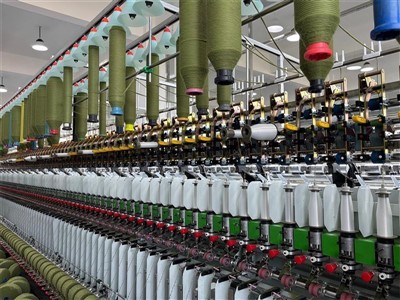
At the end of the day, calculating cone winding production isn’t rocket science—it’s just connecting a few small numbers that you can track with a notebook or a simple spreadsheet. Every mill I’ve worked with, from small 5-machine units to large 50-machine facilities, uses this same method. The key is to be realistic, not just rely on spec sheets, and account for the real-world variables that happen every shift. If you’re ready to optimize your current winding line or explore new machines that will help you hit those numbers, feel free to reach out for a detailed calculation tailored to your yarn type, shift schedule, and production goals.
Yarn Making Machine Reference
Textile Institute. (2019). Yarn Preparation: Winding and Warping. Textile Institute Publications.
Lawrence, C. A. (2003). Fundamentals of Spun Yarn Technology. CRC Press.
Subramanian, T. A. (2018). Winding Technology for Textiles. Woodhead Publishing.
Zhangjiagang Kingkangda Machinery Co., Ltd.
Zhangjiagang Kingkangda Machinery Co., Ltd. is one of the most professional yarn winding machine manufacturers and suppliers in China, specialized in providing high quality customized service. We warmly welcome you to wholesale yarn winding machine in stock here from our factory. Contact us for pricelist and quotation.
Address: Korea Industrial Park, Fenghuang Town, Zhangjiagang City, Jiangsu Province, China
E-mail: kingkangdacn@hotmail.com
WebSite: https://www.kingkangda.com/
