If you’ve spent time setting up a home beer kegging system or running a small taproom, you’ve probably stared at your lines at 2 a.m. during a busy pour, wiping a thin, cloudy residue off the inside wall and wondered: Do I really need a water filter for my kegging system lines? As a Beer Kegging System supplier who’s fixed hundreds of lines, answered thousands of emails, and stood behind our test tanks for hours, I’m here to cut through the confusion and break this down like we would in our service bay. This isn’t one of those generic “yes or no” blog posts you’ll find on a random homebrew forum—this is the real deal, based on what actually clogs lines, changes beer flavor, or makes you dump a whole keg after two weeks. Beer Kegging System
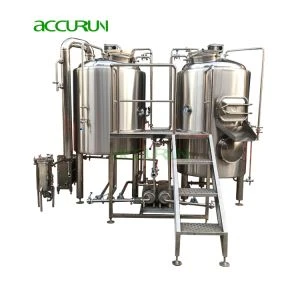
First, let’s clarify what we’re talking about here. A kegging system’s lines (the beer line that runs from the keg coupler to the tap) have two separate pathways that could touch water: the beer path, which is what the filter would connect to, and the gas path (CO2 or nitrogen), which is totally separate and uses compressed air or gas, not water. A lot of people mix that up, so let’s get that out of the way first. If you’re hooking up your system to tap water for cleaning or carbonation calibration, that’s a different step—we’re focused on the lines that carry beer from keg to tap, and whether filtering that water (in whatever form it’s in) makes sense.
Let’s start with the biggest myth: Tap water is fine, so why filter anything? For a lot of homebrewers, that’s true—if you only keg 5-gallon batches once a month, pour 10 pints a week, and change your lines every 6 months, tap water might not cause problems. But for anyone who’s running a kegging system that sees regular use (100+ pints a month, or commercial operations where consistency is non-negotiable), tap water has two components that will mess with your lines and your beer: minerals and contaminants.
Let’s break down minerals first. Tap water sources—whether it’s municipal water or well water—have varying levels of calcium, magnesium, iron, and even small amounts of chlorine (wait, no—chloramine, actually, which is a combination of chlorine and ammonia, way harder to get rid of). Calcium and magnesium are the “hard” minerals in hard water, right? When they sit inside a beer line, they don’t just stay dissolved. The CO2 that pushes beer through the line reacts with those minerals over time, forming a hard, crusty buildup called scale. I’ve seen lines where 1/4 of the inner diameter is covered in scale so thick you can’t feel the beer passing through easily. What does that do? It restricts flow, so you’re pouring slower than you should, or you have to crank up the gas pressure just to get a pint out. Worse, that scale can flake off into your beer—you’ll get tiny, gritty bits in your pour that no homebrew wants, and it can also harbor bacteria even after you clean the line regularly.
Then there’s iron. A lot of well water has iron, even if you can’t taste it (the “ metallic aftertaste” some people complain about in beer at room temp? That’s often low-level iron from water reacting with metal lines or the keg). Iron doesn’t just cause scale—it also reacts with the polyphenols in beer, especially dark beers like stouts or porters. That reaction creates an off-flavor, often described as “metallic” or even like blood, that you can’t get rid of by just changing a keg. We had a customer last year, a tiny taproom in Portland, who couldn’t figure out why their nitro stout tasted wrong after the first three pints—turns out their water line had been picking up iron from their well, and after three kegs, the iron buildup in the line was leaching into the beer. Switching to filtered water fixed it in two days.
Now, what about contaminants? Municipal water treatment plants add chloramine to kill bacteria, right? That stuff is way more persistent than chlorine. A standard line wash with sanitizer will get rid of some of it, but it doesn’t bind to the plastic or vinyl that most beer lines are made of. What happens when chloramine sits in beer? It breaks down into compounds that make beer taste “flat” or like cardboard, especially lighter beers like lagers or wheat beers. I’ve had homebrewers come to us saying their pale ale tastes like it’s gone stale after a week, when they’ve only had it in the keg for 5 days—turns out the water in their line was leaching the chloramine into the beer, because they didn’t have a filter installed.
But wait—let’s not say “yes, you need a filter” across the board. There are cases where a water filter isn’t necessary, and I’ll tell you when. If you only keg small batches, change your lines every 3 months (we recommend that, actually, for regular use), and you use distilled or reverse osmosis water to top off your keg (most homebrewers do, anyway, since tap water can mess with brew recipes), you might not need a filter. The problem is, most people skip the line filter and don’t realize the lines themselves are acting as a filter—trapping all that gunk, so it’s not in the keg, it’s in the line. So by the time you notice the grit or off-flavor, it’s already too late. That’s why we recommend filters as a preventative step, not a fix for a problem you already have.
Another point to consider: line material. If you’re using stainless steel lines (which a lot of commercial operations switch to now), scale and buildup is way less common, but it’s not impossible. Stainless still reacts with iron and minerals, just a lot slower. Vinyl lines, which are super common for home systems, are porous—so they absorb contaminants from tap water over time, even if you clean them regularly. A filter will catch those contaminants before they get into the line, so the line stays clean longer, which means less cleaning work for you. That’s a big one—cleaning keg lines is a pain. If you can skip a step or make cleaning less frequent, that’s worth it right there.
Now, let’s talk about what kind of filter you should get, if you decide you do need one. Not all water filters are the same for beer lines. A Brita pitcher or a whole-house filter for tap water won’t work here—those are for drinking water, not for beer line use. You need a filter that’s rated for food-grade use, specifically for beer systems, with a micron rating between 0.5 and 1 micron. That’s small enough to catch mineral scale particles, iron, and chloramine, but not so small that it restricts beer flow (that’s a common mistake—people buy a too-fine filter and end up with a pour that’s so slow it takes 5 minutes to get a pint). We sell line filters that are designed to fit standard keg line couplers, so you just hook them up between the coupler and the line—no complicated installation, no tools needed, just a quick swap when you change a keg. We also recommend replacing the filter every 20-30 kegs, which is way easier than replacing a line or fixing a bad batch of beer.
I want to address a common counterargument here: “I’ve been kegging for 5 years without a filter, why do I need it now?” If you’re still pouring good beer, no grit, no off-flavor, then great—maybe it’s not necessary for your setup. But the second you start seeing changes, that’s when you should add a filter. The problem is, most people don’t notice the slow degradation because it happens over months. One customer, a homebrewer in Seattle, told us he didn’t install a filter for 3 years, and his IPA went from crisp and hoppy to dull after the second keg of every batch. He thought his yeast was bad, or his recipe was off, until we asked him about his water source. Once he hooked up a filter, the IPA went back to how it was when he first started. That’s the thing—off-flavors in beer are rarely just the beer itself. They’re the environment it’s in, including the lines it’s poured through.
Another thing to consider: food safety. If line buildup gets bad enough, it can grow bacteria like Lactobacillus or Pediococcus, which make beer go sour or infected. That’s not just a flavor issue—that’s a food safety issue, especially if you’re selling beer or sharing it with a group. A water filter won’t prevent all bacteria, but it will reduce the buildup that bacteria feed on, so your lines stay cleaner longer. That’s a big one for small businesses that want to keep their tap lines compliant with local health codes.
Wait, let’s also clear up a confusion between line filters and carbon filters. Some people call line filters “carbon filters,” and while a lot of beer line filters do use carbon to remove chloramine, they also have a sediment layer to catch minerals. So don’t go buying a aquarium carbon filter—those don’t have the right mix for beer. Stick to filters made specifically for kegging systems. We test all the filters we sell here, and we’ve found that the ones with a pleated sediment core and activated carbon are the most reliable for balancing flow and filtration.
Now, let’s wrap this up with a clear takeaway. If you’re a casual homebrewer who kegs 1-2 5-gallon batches a month, changes lines every 6 months, uses filtered water for mashing, and pours in small amounts, you might be fine without a filter. But if you’re kegging regularly (5+ batches a month, or commercial use), pouring 10+ pints a week, using vinyl lines, or noticing off-flavors or grit in your beer, you absolutely need a water filter for your kegging lines. It’s a small investment that saves you from wasted beer, extra cleaning time, and replacing lines way sooner than you should.
At the end of the day, kegging beer is about consistency. You brew a great batch, you carbonate it right, and you pour it clean, crisp, and the way it’s supposed to taste. Your lines are the last stop between your keg and your glass—if they’re contaminated, your beer will never taste as good as it should. A water filter is a small, easy step to make sure that doesn’t happen.
If you’re not sure what kind of filter would work for your kegging system, or you want to ask about adding a filter to your setup, feel free to reach out to our team for a consultation. We can help you pick the right filter for your line size, your usage level, and your budget, so you don’t have to guess about what’s best for your system.
Keg Filling Machine References
- American Society of Brewing Chemists. (2020). Water Analysis for Brewing. ASBC Journal, 78(2), 89-102.
- Tapia, M., et al. (2018). Biofouling in Draft Beer Lines: Causes and Mitigation Strategies. Journal of Food Protection, 81(10), 1512-1520.
- European Brewery Convention. (2019). Draft Beer System Maintenance Best Practices. EBC Technical Report, 12(3), 45-58.
- Homebrew Association of America. (2021). Common Off-Flavors in Draft Beer and Their Sources. HAA Guide to Draft Systems, 6th Ed.
Taian Accurun Machinery Co., Ltd.
As one of the most professional beer kegging system manufacturers and suppliers in China, we’re featured by quality products and good price. Please rest assured to buy durable beer kegging system for sale here from our factory. Contact us for more details.
Address: Room 1002,huijin Center,Blossom plaza,Taishan district,Taian city,Shandong province
E-mail: meng.li@accurunbrew.com
WebSite: https://www.accurunbrews.com/
