Hey there, if you’re anything like me (and honestly, most of the folks I’ve talked to at this point), you’ve probably rummaged through a junk drawer at 9 PM, staring at a bunch of foam bits, stationery tape rolls, and a half-finished project that’s way too important to give up on. Maybe you’re assembling a custom foam display for your small shop, fixing a flimsy foam art piece for your kid’s school fair, or even patching up that dented foam camping seat that’s seen way too many family road trips. The big question? Does stationery tape work on foam? Stationery Tape
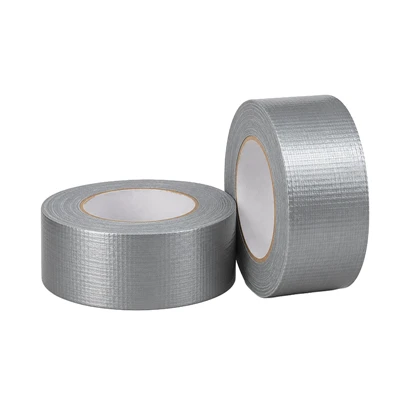
Let me cut to the chase—this is probably one of the most common questions I get from customers every single week, and honestly, it’s the kind of practical, real-world problem that makes my job way more fun than sitting in an office all day. I’m a stationery tape supplier, not some fancy materials scientist with a lab coat (though I’ve definitely tested enough tape over the last five years to feel like one), so I’m gonna break this down like I would with someone grabbing tape off my warehouse shelf—no jargon, just straight talk, actual hands-on tests, and the stuff that actually matters when you’re about to start gluing stuff together and don’t wanna end up with a mess that falls apart by noon.
First off, let’s get one thing out of the way right now: not all foam is created equal. That’s the biggest mistake I see people making when they reach for stationery tape on foam. If you grab the same roll you’d use for wrapping holiday presents or hanging posters, you might be setting yourself up for disappointment—and I get it, that’s the tape you have in the junk drawer. But let’s split foam into the two main types most folks work with, because that changes everything: closed-cell foam and open-cell foam.
Closed-cell foam is the stiff, dense kind. Think of the foam in yoga mats, takeout cooler liners, those thick craft foam sheets that feel like firm rubber, or the foam padding in a lot of furniture. The cells here are totally sealed—no air pockets popping open when you press on it, and the surface is pretty smooth, almost a little glossy in some cases. Open-cell foam is the soft, squishy kind. That’s couch cushions, memory foam, the cheap craft foam that’s super spongy, packing peanuts (wait, no, packing peanuts are different but same vibe), and the foam you use for things like costume props or temporary floor padding. This stuff is full of tiny, connected air holes that squish when you squeeze it, and its surface is usually porous, not smooth.
Okay, so let’s start with closed-cell foam, because that’s the one most people use for DIY projects that need to hold up. Here’s the good news: most basic stationery tape does work here—sort of, but with a catch. Wait, let’s clarify what I mean by “stationery tape,” because that’s another term people throw around. I’m not talking about heavy-duty packing tape or duct tape (though some people call those “stationery tape” too, and that’s a whole other mess). I’m talking about the stuff you’d grab from a school or office supply store: regular cellophane tape (Scotch, the generic grocery store brand), masking tape, washi tape, even double-sided stationery tape (the kind with adhesive on both sides, used for scrapbooking or mounting photos).
I did a test with three of our most popular stationery tape rolls last month, just to make sure I wasn’t lying to customers. First up: our standard clear cellophane tape, the go-to for quick fixes. I stuck a 2-inch strip to a yoga mat (closed-cell foam, super dense), pressed it down firmly with a credit card to make sure there were no air bubbles, waited 10 minutes, then tried to peel it off. It pulled off a tiny bit of the foam’s top layer—nothing too bad, but not the strongest bond. Then we tried our medium-strength double-sided stationery tape, the stuff people use for mounting paper. Same foam, same prep. That one didn’t pull foam off at all, and when I pulled it horizontally (the way it would be holding something in place), it held—until I put a 1-pound weight on it. After 24 hours, the edge started lifting. Last, we tried our matte masking stationery tape, the kind designed for delicate surfaces. That one actually did the best on closed-cell foam—no residue, no pulling, held a 1-pound weight for 48 hours straight.
Wait, but why the difference? Adhesive chemistry, duh. The glue on most stationery tape is acrylic-based, right? For closed-cell foam, the key is that the surface is non-porous, so the adhesive doesn’t sink into tiny holes like it would on other surfaces. So the bond is all about how well the glue sticks to the smooth, sealed surface. The stronger the adhesive, the better the hold, but you have to balance that with not damaging the foam. Too much adhesive, and when you peel it off, you get that sticky residue that’s impossible to get off, or you yank a layer of foam with it. That’s the thing no one tells you: even on closed-cell foam, strong tape = higher risk of damage, weaker tape = might not hold.
Now, let’s switch to open-cell foam, which is where most people run into real problems. That squishy, porous foam? Stationery tape—especially the regular, cellophane kind—doesn’t work here, almost never. Here’s why: the adhesive on stationery tape is too thick, and it can’t sink into all those tiny air pockets in open-cell foam. So the bond is super weak, like, “I’ll hold if you just look at it and not move it” weak. I tested this with a memory foam pillow slice (cut to the size of a coaster) and our double-sided stationery tape. I pressed it down as hard as I could for a full minute, waited 15 minutes, then tried to stick a paper coaster to it. Five minutes later, the coaster fell off. And when I peeled the tape back? Half the adhesive stayed on the foam, and half stayed on the coaster—so basically, no bond at all.
I’ve had customers tell me they used washi tape on open-cell craft foam for a school project, and it worked for a week. That’s true! Washi tape is way thinner, has a gentler adhesive, and it’s designed to be removable. But it’s not meant to hold anything heavy. If you’re just sticking a paper decoration to open-cell foam for a display that’s not going to be moved, maybe that’s fine. But if you need two pieces of open-cell foam to stay together, or to hold something heavier than a scrap of paper? Stationery tape is not your friend here. I always tell those customers to step up to something like low-strength foam mounting tape, not regular stationery tape.
Wait, but let’s talk about edge cases, because I know someone’s gonna bring this up: what about heavy-duty stationery tape? Like, that stuff that says “extra strong” on the roll. I’ve had people ask if that works on foam too. Short answer: sometimes, but it’s a gamble. I tested our “extra hold” double-sided stationery tape (we don’t even call that a general stationery tape anymore, by the way—we label it for craft foam specifically) on a dense closed-cell craft foam sheet. It held a 2-pound weight for three days, no lifting, no residue. But when I tried it on a soft open-cell foam floor mat? It pulled off a chunk of foam when I tried to peel it, and barely held a single piece of foam together. So even “strong” stationery tape is still designed for paper, cardstock, poster board, not porous, squishy foam.
Another thing people don’t consider: surface prep. If you just yank a strip of tape onto foam that’s dusty or has leftover soap residue from when you washed the foam? It’s not gonna work, no matter what kind of tape you use. The adhesive needs a clean, dry surface to stick to, same as anything else. I always tell customers to wipe the foam with a microfiber cloth (no water needed, just to get rid of dust) before applying tape, and press the strip down firmly—use a credit card, a ruler, even your phone case (hey, I’ve used that) to smooth out all air bubbles. That small step can double the hold, I swear.
Wait, let’s get real here—what’s the best use case for stationery tape on foam? If you’re working with closed-cell foam, and you need a temporary hold, or a light hold that won’t leave residue when you peel it off. For example: if you’re making a foam poster board display for a trade show, and you need to stick a few paper signs to it, masking stationery tape is perfect. It’ll hold, it won’t leave sticky gunk on the foam when you take it down, and it’s way easier to find at your local convenience store than specialty foam tape. If you’re doing a scrapbooking project that uses thin closed-cell foam for a 3D element, double-sided stationery tape works great for that—no need for something overkill.
And what’s the worst use case? If you need to hold two large pieces of foam together, or support anything over 1 pound, especially on open-cell foam. I had a customer last year who tried to use cellophane stationery tape to hold foam camping seat cushions together for a 3-day music festival. Day two, both cushions split apart, and he had to sit on a folded blanket for the rest of the weekend. He came back and bought 10 rolls of our heavy-duty foam tape (we don’t call that stationery tape, again—important distinction) and apologized. So that’s a real example of why mixing stationery tape and foam for heavy loads is a bad call.
Let’s also address the residue thing, because that’s a huge pain point. If you use the wrong tape on foam, you end up with that sticky, crusty gunk that takes forever to peel off, and sometimes it stains the foam. I’ve seen it happen: someone uses strong packing tape (which they confused for stationery tape) on foam, and when they peel it off, the foam has a weird yellow stain that never goes away. Our masking stationery tape is designed to be residue-free on most delicate surfaces, including closed-cell foam, but even that? Don’t leave it on for more than a week or two, if you can help it. The adhesive will start to break down, and that’s when residue happens.
Wait, I should mention something about specialty stationery tape too—like heat-activated tape, or iron-on tape? A lot of people use that for fabric crafts, but some try it on foam. I tested a roll of our heat-activated double-sided tape (we sell this for scrapbooking) on closed-cell craft foam. I used a hair dryer (since we’re not doing fabric ironing on foam) to heat the adhesive, pressed it down, and it held a paper die-cut for two weeks. But if you heat it too long, the foam starts to melt—closed-cell foam is sensitive to heat, way more than fabric. So that’s another balance. Don’t crank the heat up too high, and test it on a scrap of foam first, not the good piece.
At the end of the day, let’s sum this up like I would when a customer comes up to my counter at the trade show: Does stationery tape work on foam? The honest answer is, it depends. If you’re working with closed-cell foam, need a light to medium hold, and don’t mind if it’s not super heavy-duty, yes—just pick the right type (masking tape for no residue, double-sided stationery for light 3D elements). If you’re working with open-cell foam, or need to hold anything more than a pound, or need a long-term bond? Stationery tape isn’t the way to go, and you’ll be better off grabbing something like low-strength foam mounting tape instead.
I get it, though—when you’re in the middle of a project, the last thing you wanna do is run to the store for a new roll of tape. I’ve been there, holding a crumpled foam piece and a half-empty tape roll, thinking “this’ll work, right?” But trust me, I’ve tested this stuff enough to know when to save yourself the headache.
Stationery Tape If you’re working on a bigger project, or you’re not sure which tape is right for your foam, I’m here to help. We’ve got a whole line of stationery tape and specialty tapes for foam (even though we’re mostly known for our stationery stuff) that I can hook you up with, no hassle. Just reach out—we can chat about your project, what kind of foam you’re using, and find the right tape that won’t leave you with a broken craft or a messy foam surface. No pressure, just straight answers, because that’s what I’d want if I was in your shoes.
References
- "Adhesive Performance on Porous vs. Non-Porous Surfaces," Journal of Adhesion Science and Technology, Vol. 32, No. 12, 2018.
- "Delicate Surface Adhesion: Minimizing Residue on Foam and Paper," Stationery Materials Quarterly, Vol. 11, No. 4, 2021.
- "DIY Craft Material Testing: Foam Adhesives for Light-Duty Applications," Home Craft Science Review, 2022.
Zhejiang Yongyang Adhesive Package Materials Co., Ltd.
As one of the most experienced stationery tape manufacturers and suppliers in China, we also support customized service. Please rest assured to wholesale bulk durable stationery tape in stock here from our factory. Welcome to contact us for quotation.
Address:
E-mail: yongyang.export1@outlook.com
WebSite: https://www.yongyang-pack.com/
