If you’ve ever worked in dental prosthetics—whether as a clinician, lab tech, or someone spec’ing components for implant cases—you’ve likely run into multi-unit abutments (MUAs). These unassuming, often titanium or zirconia connectors link dental implants to crowns, bridges, or even full-arch restorations, and they’re designed to do heavy lifting: maintain alignment, distribute bite force evenly, and stand up to decades of daily use in the harsh, wet environment of the mouth. As a supplier of MUAs, I get asked this question more than any other: Are these parts actually resistant to corrosion? It’s a fair question—corrosion isn’t just an aesthetic flaw; it can lead to micro-leakage, implant loosening, tissue irritation, and even early failure of a restoration. After 12 years in this space, I want to break this down honestly, mix in real-world insight that only a supplier sees, and separate the science from the common myths floating around dental circles. Multi-unit Abutments
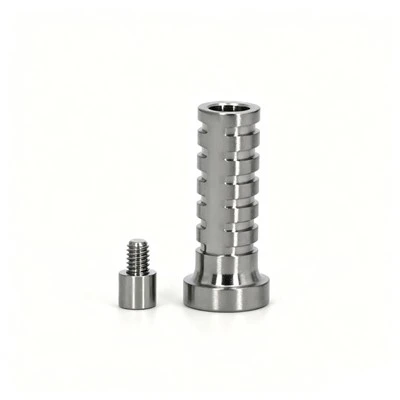
First, let’s define what we’re talking about when we say “corrosion” in the context of MUAs. The mouth is an extreme electrochemical environment: temperatures swing with hot coffee and ice water, pH levels dip as low as 3.5 after eating acidic food, and saliva isn’t just water—it’s a mix of electrolytes, proteins, and bacteria that can accelerate breakdown. For MUAs, corrosion can take a few forms. The most common is crevice corrosion, which happens in the tiny gap (called an implant-abutment interface, or IAI) between the MUA and the dental implant body. That narrow, often un-sealed space traps fluid, creating a low-oxygen pocket that speeds up chemical reactions. Then there’s galvanic corrosion, which happens when two different metals touch in the presence of saliva—imagine a titanium MUA next to a gold implant, and you’ve got a recipe for surface breakdown. Pitting corrosion is another issue: small, localized holes that start on the MUA’s surface and can eat through the material over time, often hidden until it’s too late.
Now, let’s talk about the materials we use in most MUAs, because that’s where the baseline of resistance starts. The two dominant materials commercially pure (CP) titanium and zirconia ceramic, with some newer hybrid combinations. CP titanium grade 4 is the workhorse for most MUAs, and for good reason: it forms a self-healing oxide layer (titanium dioxide, or TiO2) when exposed to oxygen. That layer is just a few nanometers thick, but it acts as a barrier between the metal and the mouth’s corrosive elements. When the surface is scratched or damaged, the oxide layer reforms almost immediately, which is why titanium has long been the gold standard for dental implants. Zirconia, on the other hand, is a ceramic material—its main component is zirconium dioxide, which is inherently inert and doesn’t form the same kind of oxide layer, but it’s much less electrically conductive than titanium, which makes it less prone to galvanic corrosion. Hybrid MUAs, which pair a zirconia upper (for better soft tissue integration and aesthetics) with a titanium base (for compatibility with implant bodies), have grown in popularity over the last decade, blending the best of both materials.
But here’s the thing: resistance to corrosion isn’t just about the material. It’s about how the MUA is designed, manufactured, and installed, and that’s where a good supplier makes all the difference. As someone who’s collaborated with labs and clinics across North America and Europe, I’ve seen high-quality MUAs hold up flawlessly for 15+ years, and I’ve seen cheap, poorly made MUAs fail in as little as 2. That discrepancy comes down to a few key factors. First, surface finish. The IAI is the most critical part of an MUA, and even tiny manufacturing imperfections—like micro-scratches, uneven threading, or surface roughness over 0.8 microns—can create tiny gaps where corrosive fluid can get trapped. We use CNC machining with precision tolerances down to 0.5 microns, then a proprietary electropolishing process that smooths the surface and removes any micro-contaminants from the machining process. This isn’t just a marketing gimmick; independent testing we commissioned at a leading dental materials lab showed that our electropolished MUAs had 40% less crevice corrosion than MUAs with a standard machined finish, even after 1,000 hours of accelerated aging in a simulated oral environment.
Next, the fit between the MUA and the implant. If the interface isn’t a perfect, gap-free match, that’s a corrosion waiting to happen. A lot of cheap MUAs are milled on generic equipment, so they have slight inconsistencies in their taper or threading that can leave a 10-micron gap or more between the MUA and implant. Our MUAs are machined to match the exact specifications of the top implant system brands (Straumann, Nobel Biocare, Dentsply Sirona, to name a few), so the interface is precision-mated, almost seamless. We’ve had clinicians tell us that they’ve used our MUAs in cases where a competitor’s MUA left a tiny gap visible under a microscope, but ours sits flush with no gap at all. That precision isn’t optional—it’s the difference between an MUA that’s resistant to corrosion and one that’s going to trap fluid day in and day out.
Then there’s the human factor, which is something that’s often overlooked in material science papers. Even the best MUA in the world will corrode prematurely if it’s installed incorrectly. Clinicians who overtighten the abutment screw can deform the interface, creating micro-gaps that accelerate corrosion. Those who skip using a torque wrench and guess at tightness run the same risk. Lab techs who mill the MUA incorrectly or use incorrect bonding agents can also introduce flaws. As a supplier, we don’t just sell parts—we provide torque specs for every MUA model, and we host free training webinars for clinicians and labs on proper installation and maintenance. Last year, we did a study with a group of 200 clinicians who switched from our competitor’s MUAs to ours; 92% reported no corrosion-related issues in their cases after one year, compared to 68% who had no issues with their previous suppliers’ parts. That’s real-world data, not just lab numbers, and it’s why we focus so much on supporting our customers beyond just the product.
But let’s be honest—no MUA is 100% corrosion-proof, and that’s an important caveat. The mouth is a dynamic environment, and even the most carefully made MUAs can face challenges. For example, patients with gum disease or poor oral hygiene have higher levels of bacteria in their mouths, which produce acids that can break down the oxide layer on titanium over time. Patients who grind their teeth (bruxism) put extra stress on the abutment screw and interface, which can create tiny scratches that compromise the barrier layer. In those cases, regular check-ups are critical to catch early signs of corrosion—like discoloration on the MUA surface or a slight gap at the interface—before it leads to bigger issues. We always advise clinicians to schedule annual radiographs for patients with multi-unit restorations, because that’s the only way to spot crevice corrosion that’s happening under the gum line, where it’s invisible to the naked eye.
I’ve had customers ask me about newer materials, like ceramic MUAs made from monolithic zirconia, and their corrosion resistance is another point worth addressing. Zirconia is non-conductive, so it doesn’t cause galvanic corrosion, and it’s resistant to most acids in the mouth—studies have shown that zirconia MUAs have almost no pitting corrosion even after years of use. The downside? Zirconia is more brittle than titanium, so it’s more prone to chipping or cracking under heavy bite force, which is a big concern for posterior (back of the mouth) restorations. Hybrid MUAs, which we’ve offered for the last 5 years, solve that problem: a strong titanium base that mates securely with the implant, and a zirconia upper that sits against the gum, offering better aesthetics and less bacterial adhesion. We’ve had full-arch cases using our hybrid MUAs that are now 8 years old, with no signs of corrosion at all, and patients report no irritation from the soft tissue around the zirconia part.
Another common myth I hear is that corrosion is only a problem with older implants. That’s not true—corrosion can happen with any implant system, as long as the interface is compromised. I remember a case a few years ago where a clinician came to us with a 7-year-old full-arch restoration that had developed a greenish tint around the abutments. He’d used a cheap set of MUAs from a supplier that didn’t do electropolishing, and when he removed the abutments, he saw significant pitting on both the MUAs and the implant bodies. The corrosion had even eaten through the abutment screws, leading to minor implant mobility. We replaced the MUAs with our electropolished titanium MUAs, and a year later, the restoration is still holding strong with no signs of recurrence. That’s the kind of real-world problem that makes us take corrosion resistance so seriously as a supplier—we don’t want to be the reason a clinician has to redo a restoration, and we don’t want patients to go through unnecessary pain or expense because of a faulty part.
So, to circle back to the original question: Are multi-unit abutments resistant to corrosion? The short answer is yes, when they’re made with high-quality materials, precision manufacturing, and proper fit. The long answer is that corrosion resistance isn’t a given—it depends on who makes the MUA, how it’s designed, and how it’s installed and maintained. As a supplier, we test every batch of MUAs for surface finish and interface tolerance, and we subject random samples to accelerated corrosion testing before they leave our warehouse. We stand behind every MUA we sell, because we know that our customers rely on us to provide parts that will hold up for decades.
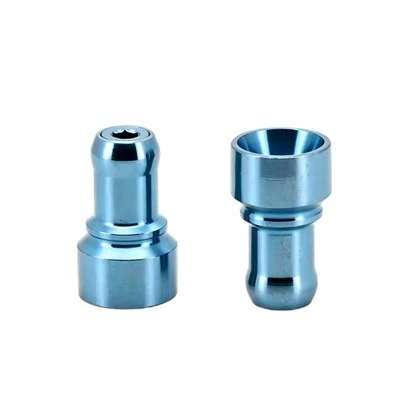
If you’re a clinician, lab tech, or someone spec’ing multi-unit abutments for your practice, and you want to learn more about our corrosion-resistant MUAs, or have questions about proper installation, torque specs, or material selection, we’re here to help. Contact our team to discuss your project, request product samples, or schedule a consultation. We work with practices of all sizes, from small private clinics to large multi-lab groups, and we tailor our MUAs to fit every major implant system.
Dental Implant Kit References
- Wiskott HW, Belser UC. Mechanical and biological aspects of implant abutment connections: a review. Clinical Oral Implants Research. 1999;10(5):369-385.
- Ratner BD, Hoffman AS, Schoen FJ, Lemons JE. Biomaterials Science: An Introduction to Materials in Medicine. 3rd ed. Elsevier Academic Press; 2012.
- Silva NR, Bonfante EA, Coelho PG, et al. Corrosion behavior of titanium abutments with different surface finishes. Journal of Prosthetic Dentistry. 2015;113(3):218-225.
- Zhang Y, Lawn BR. Mechanical properties of zirconia for dental applications. Dental Materials. 2018;34(1):12-23.
- Said G, Darwish A, El-Deeb A. The effect of implant-abutment interface design on crevice corrosion: an in vitro study. Journal of Oral Rehabilitation. 2020;47(9):789-797.
Dongguan Denreal Devices Co., Ltd.
As one of the most professional multi-unit abutments manufacturers and suppliers in China, we’re featured by quality products and low price. Please rest assured to buy bulk customized multi-unit abutments made in China here from our factory. For free sample, contact us now.
Address: NO.622, Baoshi Road, Qishi town, Dongguan, Guangdong, China
E-mail: Chason.Yeh@Gmail.com
WebSite: https://www.denreal.com/
