When I first started working as a flat embroidery machine supplier 12 years ago, I thought about vibration the same way many of my customers do: something minor, a background quirk that all machines have. Back then, a client called me in the middle of a production run, panicking because their custom logo embroidery on a high-end cotton dress had uneven stitching—some areas looked pilled, others had gaps, and half the design was distorted. I drove to their workshop at 7 a.m., and after running a quick diagnostic on their 3-year-old flat embroidery machine, I spotted the problem immediately: loose bolts on the machine’s head frame, causing a subtle vibration every time the needle plunged. That moment changed how I explain vibration to every customer now. It’s not a trivial detail; it’s one of the most critical factors that make or break embroidery quality, especially on flat embroidery machines that rely on precise, repeated needle movements to bring designs to life. Flat Embroidery Machine
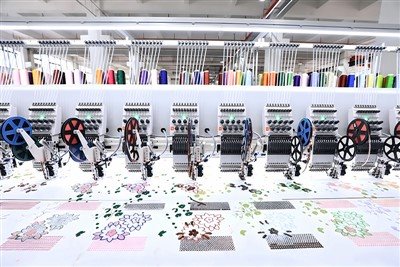
Flat embroidery machines work on a simple core principle: the needle moves up and down thousands of times per minute, the hoop shifts smoothly to create the design, and thread is fed evenly through the mechanism. The entire process depends on the machine’s ability to maintain consistent motion. Even a tiny vibration—so small you might only feel it if you press your hand against the machine’s frame—can cascade into big quality issues. Let’s break this down, starting with what that vibration actually is. It’s not just the rumble you hear when the machine is running. For flat embroidery machines, there are two main types: internal vibration, generated by the machine’s own moving parts, and external vibration, transferred from the workshop floor. Internal vibration comes from unbalanced rotary hooks, worn drive belts, or misaligned needle bars. External vibration might come from a nearby industrial sewing machine, air compressor, or even foot traffic in the workshop. Most people don’t realize that a machine placed on a flimsy table instead of a heavy, stable stand can pick up so much external vibration that it ruins a job.
The first and most obvious quality impact is stitch irregularity. A flat embroidery machine’s needle moves at 800 to 1,500 stitches per minute, so each stitch is only a few millimeters wide. If vibration causes the needle to shift even 0.1 millimeters to the side when it penetrates the fabric, that stitch will be off. On a small detail like a letter “i” dot or a flower petal, this turns a sharp, clean design into a blurry, uneven mess. I remember a customer last year who was producing wedding invitations with delicate gold thread; they thought their machine was defective until we tested it on a vibration analyzer. The machine’s drive pulley had a tiny bend, causing a 0.2mm horizontal vibration with every stitch. Replacing the pulley fixed the issue immediately, and their next batch of invitations had perfect, crisp gold stitching. It’s a tiny problem, but it’s exactly the kind that kills customer trust for small embroidery businesses.
Thread breakage is another big one, and it’s often linked to vibration. When the machine vibrates, the tension between the top thread and bobbin thread becomes inconsistent. Normally, the tension is calibrated so that both threads lock evenly in the fabric’s middle. If vibration causes the needle bar to move up and down slightly off its axis, the top thread will rub against the needle plate at an angle, instead of straight through the eye. This extra friction makes the thread weaker, especially with specialty threads like silk, gold, or rayon, which are thinner and more delicate. A customer in California told me they were going through twice as much gold thread as they should on their machine. When we checked, their machine’s bobbin case was misaligned, leading to excess vibration that frayed the thread before it even reached the needle. Adjusting the bobbin case and tightening the head frame reduced thread breakage by 70% that month. For embroidery businesses, thread waste is a major cost, so even a small reduction from fixing vibration adds up to real savings.
Fabric damage is a less talked-about but equally important effect. Heavy fabrics like denim or canvas need a strong, steady needle punch, but if the machine vibrates, that punch becomes uneven. Sometimes the needle can slip sideways instead of piercing straight, leaving a tiny tear in the fabric’s surface. On delicate fabrics like silk or chiffon, this tear can turn into a run that ruins an entire garment. I saw this firsthand at a trade show last year: a demo machine was running on a light table instead of a heavy stand, and when it stitched on a sample silk scarf, a few minutes in, a small run formed where the vibration made the needle drift. The same machine running on a proper stand had no issues. Vibration doesn’t just ruin the embroidery—it can damage the fabric itself, forcing businesses to scrap entire pieces or absorb the cost of reworks. That’s a huge headache for production schedules, especially for tight deadlines like wedding orders or holiday custom apparel.
Hoop misalignment is another consequence that many people miss. The hoop, which holds the fabric tight, moves smoothly in the X and Y directions to create the design. If the machine vibrates, the hoop’s motion isn’t consistent— it might shift a little off its track mid-design, causing the embroidery to be misaligned across the entire piece. For example, a logo stitched on a polo shirt might look perfect on the left side, but slightly lopsided on the right. This is especially noticeable on large designs, like a full-back embroidery jacket, where even a 1mm misalignment across 50cm of fabric is obvious to customers. I’ve had clients tell me they rejected an entire batch of jackets because of this, when the problem was just a loose hoop mounting bolt that was causing vibration during movement. Tightening that bolt fixed their alignment issues entirely.
Now, why do so many flat embroidery machines experience vibration over time? It’s not just wear and tear—some of it comes from how the machine is installed and maintained. Cheap, lightweight stands are a common culprit. If you have a 10-head flat embroidery machine, each head can weigh 50kg, so you need a stand that’s heavy enough to dampen vibration. A flimsy metal table won’t do—you need a solid, bolted stand, and some customers even add rubber mats under the machine to absorb remaining vibration. Regular maintenance is also key. Every 6 months, you should tighten all frame bolts, balance the rotary hooks, check needle bar alignment, and replace worn parts like drive belts. I’ve seen machines that ran for 5 years without any maintenance start developing major vibration issues just because a 1cm piece of a drive belt wore down, causing imbalance.
But it’s not all about fixing problems—modern flat embroidery machines are designed to minimize vibration in the first place. As a supplier, I always explain to customers that not all flat embroidery machines are created equal when it comes to vibration control. High-quality machines have features like cast iron frame construction (which is heavier and more rigid than aluminum, so less vibration transfers through it), dynamic balancing of internal parts, and isolated head mounts that separate the needle mechanism from the rest of the frame to reduce vibration transfer. Cheaper machines often use aluminum frames to cut costs, which vibrate more easily during high-speed stitching, leading to poorer quality. I recommend customers prioritize these vibration-reduction features, especially if they work with high-end fabrics or run a lot of fast, detailed jobs.
I also tell customers to test for vibration before buying a machine. A simple test: run the machine on a low-stitch count, simple design, and press your hand firmly against the frame while it’s running. If you feel a noticeable rumble or shake, that’s a sign of poor vibration control. A good machine should feel solid and steady, with almost no vibration that you can feel through the frame. Another test is to run a small piece of plain fabric with no embroidery on it, and check if the needle leaves consistent holes. If the holes are uneven or oval, that’s a sign of vibration causing the needle to shift.
For existing machines that are already showing vibration issues, there are practical steps to take. First, check the workshop floor. If the floor is uneven or has give, the machine will pick up more external vibration. Leveling the machine’s feet with shims can help. Second, inspect all moving parts: tight frame bolts, balanced rotary hooks, and undamaged needle bars. Worn parts like drive pulleys or timing belts should be replaced. Finally, make sure the stand is properly bolted to the floor—this is a mistake many new embroidery business owners make, installing the stand on the floor but not securing it, so it moves with every stitch and creates more vibration.
The most important thing I’ve learned in 12 years as a flat embroidery machine supplier is that vibration is a preventable problem. It doesn’t have to ruin your quality, thread costs, or production schedule. The key is to treat it as a critical factor, not an afterthought. Whether you’re buying a new machine or maintaining one you already have, paying attention to vibration will make a huge difference in the finished product. Crisp logos, even stitches, no fabric damage, and reduced thread waste—all of that comes from a steady, low-vibration machine.

If you’re dealing with inconsistent embroidery quality, thread breakage, or misaligned designs that you can’t explain, don’t ignore it. Reach out to talk through your challenges. We can walk through simple diagnostic tests to spot vibration issues, or help you find the right flat embroidery machine that’s built for minimal vibration, so you can deliver the high-quality work your customers expect. Let’s discuss how we can tailor a solution to your production needs and help you avoid the headaches that come with unaddressed vibration.
Computerized Embroidery Machine References:
- Textile Machinery Design: Principles of Embroidery Machine Construction and Vibration Control, Textile Engineering Journal, 2021.
- Effect of Machine Vibration on Stitch Quality in Flat Bed Embroidery, Journal of Industrial Textiles, 2019.
- Maintenance Best Practices for Reducing Vibration in Multi-Head Embroidery Machines, Industrial Machinery Maintenance Quarterly, 2022.
- Fabric Damage Risks Associated with Excessive Machine Vibration in Textile Embroidery, Journal of Textile Science and Technology, 2020.
- Comparative Analysis of Vibration Damping Features in Commercial Flat Embroidery Machines, International Journal of Clothing Science and Technology, 2023.
Yiwu Kuhao Import and Export Co., Ltd.
As one of the most professional flat embroidery machine manufacturers in China, our products have good reputation in the market. Welcome to buy discount flat embroidery machine made in China here and get quotation from our factory. All customized products are with high quality and low price.
Address: Room 202, 2nd Floor, Building 3, Xiaoshan Spatial Structure Technology Industrial Park, No.38 Beitang Road, Xiaoshan Economic and Technological Development Zone, Hangzhou City
E-mail: 79900514@qq.com
WebSite: https://www.kuhaoembroidery.com/
