Hey folks, if you’re in the solar game—whether you’re a installer, EPC, or someone who’s been around the block with rooftop or ground-mount PV projects—you know the PV guide rail is way more than just a piece of metal holding panels up. Skip a bad rail, and you’re looking at panel slippage, wind damage, or worse, a whole system failing years down the line. As someone who’s actually on the supply end of this stuff, I get how overwhelming it can be to sift through all the brands out there. Let’s cut through the noise and break down which ones actually deliver, and which ones you can skip. PV Guide Rail
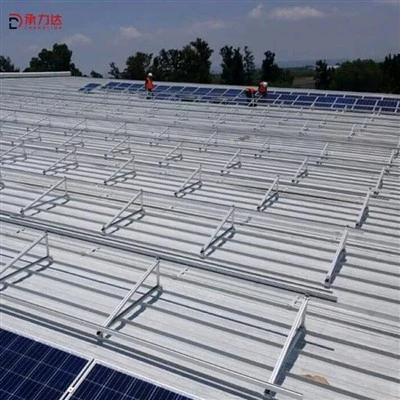
First, let’s get one thing straight: not all PV guide rails are created equal. The best ones balance strength (for wind, snow, and whatever else your site throws at it), corrosion resistance (huge if you’re near saltwater or in a humid climate), and ease of installation (time is money, right? If your rail takes twice as long to put up, that eats into your profit margin). I’ve worked with installers who’ve bought cheap rails from no-name suppliers, and 9 times out of 10, those end up bending or rusting within 2-3 years. So let’s start with the brands that have stood the test of time, not just flashy marketing.
First up, I’ve got to mention Unirac. Wait, I know, Unirac’s been around forever—they’re basically the OG of PV mounting systems. But here’s why they’re still a go-to for most installers I know: their rails are made from 6061-T6 aluminum, which is the industry standard for a reason. It’s strong, lightweight, and super resistant to corrosion (even in coastal areas). What I love about their guide rails is that they’re designed to work with almost every panel on the market, so you don’t have to scramble to find a custom fit. And let’s talk installation: their pre-punched holes mean you don’t have to drill on site, which cuts down on time and the risk of mistakes. I’ve seen installers knock out a 100-panel ground-mount job in a day easier with Unirac than with some cheaper brands. The only downside? They’re not the cheapest, but in this business, you get what you pay for. A rail that lasts 20 years is way better than one you’re replacing every 5.
Next, if you’re looking for something a bit more budget-friendly but still reliable, look at Clenergy. This Aussie brand has been killing it in the APAC and European markets for years, and they’ve started making a big push in North America too. Their guide rails are also 6061-T6 aluminum, same as Unirac, but they’ve got some nifty features like a modular design that lets you adjust the length on site without special tools. I’ve had installers tell me Clenergy’s rails are perfect for rooftop projects where space is tight—they’re lighter than a lot of competitors, so you don’t have to worry about extra load on the roof. Another plus: they offer both standard aluminum and even stainless steel options for super corrosive environments, like near the ocean. The price point is a bit lower than Unirac, so if you’re working on a tight budget but don’t want to sacrifice quality, Clenergy’s solid.
Wait, let’s not sleep on aluminum rails from IronRidge either. This US-based brand is a relative newcomer compared to Unirac, but they’ve made a name for themselves with rails that are built for high-wind zones. If you’re in Florida, Texas, or any place that gets big hurricanes or tornadoes, IronRidge’s guide rails are worth checking out. They undergo rigorous testing—like 150 mph wind tunnel tests—and their rails have a higher load capacity than a lot of other brands. I had a big installer client in Miami go with IronRidge last year, and he said they held up way better than some no-name rails he’d used before during a minor storm last month. They’re also super easy to install, with a clip system that lets you lock panels in place without bolts, which saves even more time. Yeah, they’re a bit pricier than Clenergy, but for high-wind areas, the peace of mind is huge.
Now, what if you’re working on a small residential project, like a 5kW rooftop setup for a homeowner? You don’t need a massive, heavy-duty rail—you need something that’s easy to handle, not too expensive, and still reliable. That’s where brands like SunModo come in. They specialize in smaller-scale mounting systems, and their guide rails are perfect for residential installs. They’re lightweight, so one person can carry a whole rail without help, and they’re compatible with most residential panels. I’ve sold a lot of SunModo rails to small installers who just starting out, and they say the ease of use cuts down on labor costs a ton. The only thing to keep in mind? They’re not built for commercial or large-scale projects with super high load requirements, so save these for residential.
Wait, let’s talk about the no-names you should avoid. I’ve seen so many installers get burned by cheap Chinese imports that pop up on Alibaba or random industry forums. Yeah, they’re $0.50 cheaper per meter, but more often than not, they’re made from lower-grade aluminum (like 6063 instead of 6061-T6) which is way weaker, or they have inconsistent thickness—one meter might be 2mm, the next 1.5mm, so it bends under load. I had a client who bought a bulk order from a no-name brand last year, and half the rails bent during installation because they were so thin. He ended up having to throw them out and reorder, costing him twice as much in the long run. So if a brand is too good to be true, it probably is.
Another thing to consider: material matters. Most PV guide rails are aluminum, which is the best bet for corrosion resistance and weight, but some are steel. Steel rails are cheaper, but they rust like crazy if they’re not properly coated, and they’re way heavier, which can add extra load to your structure. Only go with steel if you’re in a super low-corrosion area and you’re on a really tight budget, but even then, aluminum is worth the extra cost.
Wait, let’s also touch on certifications. Any good PV guide rail brand will have certifications from places like the International Electrotechnical Commission (IEC) or Underwriters Laboratories (UL). Those tests mean the rail has been verified to withstand wind, snow, and temperature changes, so you know it’s not going to fail. Unirac, Clenergy, IronRidge, SunModo—all of them have UL and IEC certifications, so that’s a good checkmark.
As a supplier, I’ve worked with all these brands, and I’ll be honest: the one I recommend depends on your project. If it’s a large commercial ground-mount in a high-wind area, IronRidge or Unirac. If it’s a residential rooftop, SunModo. If you’re in a coastal area, Clenergy’s stainless steel option is perfect. The worst thing you can do is cut corners on the guide rail—this is the part that holds your entire solar system together. Skip the cheap stuff, and you’ll save yourself a headache (and money) down the line.

If you’re not sure which brand fits your project, or you have questions about specs, pricing, or compatibility with your panels, feel free to reach out. We can help you figure out exactly what you need, no pressure.
Photovoltaic Accessories References
- International Electrotechnical Commission (IEC) 61215: Crystalline silicon photovoltaic (PV) modules – Design qualification and type approval.
- Underwriters Laboratories (UL) 2703: Safety standard for mounting systems for photovoltaic modules.
- Renewable Energy Policy Project (REPP): PV Mounting Systems Market Report, 2023.
- Aluminum Association: 6061-T6 Aluminum Alloy Properties for Structural Applications.
Wuxi Chenglida Machinery Co., Ltd.
We are one of the most professional pv guide rail manufacturers and suppliers in China, also support customized service. Please feel free to buy durable pv guide rail made in China here from our factory. Quality products and reasonable price are available.
Address: No.4 Ruifeng Road, Huishan District, Wuxi City
E-mail: postmaster@wxcldjx.com
WebSite: https://www.wuxi-chenglida.com/
