Medical silicone gel adhesives have gained significant traction in the healthcare industry due to their excellent biocompatibility, moisture permeability, and adhesion properties. As a leading supplier of medical silicone gel adhesives, I’ve witnessed firsthand the growing demand for these products in various medical applications, from wound dressings to wearable medical devices. One crucial aspect that often comes under scrutiny is how these adhesives respond to mechanical stress. In this blog post, I’ll delve into the science behind the mechanical stress response of medical silicone gel adhesives, exploring the factors that influence their performance and the implications for medical applications. Medical Silicone Gel Adhesive
Understanding Mechanical Stress in Medical Applications
Mechanical stress in medical applications can manifest in various forms, including shear stress, tensile stress, and compressive stress. Shear stress occurs when two surfaces slide past each other, such as when a wound dressing is subjected to lateral movement on the skin. Tensile stress, on the other hand, involves stretching the adhesive, which can happen when a wearable medical device expands with the body’s movement. Compressive stress is experienced when the adhesive is pressed between two surfaces, like when a pressure bandage is applied.
The ability of a medical silicone gel adhesive to withstand these types of mechanical stress is crucial for its effectiveness. For example, in wound dressing applications, the adhesive must maintain its bond with the skin even when the patient moves, to prevent the dressing from shifting or falling off. Similarly, in wearable medical devices, the adhesive needs to adhere firmly to the skin without causing discomfort or skin irritation during extended use.
Factors Influencing the Response of Medical Silicone Gel Adhesives to Mechanical Stress
Cross – linking Density
The cross – linking density of the silicone gel adhesive plays a vital role in its mechanical properties. Cross – linking refers to the chemical bonds that connect the polymer chains in the silicone gel. A higher cross – linking density generally results in a stiffer adhesive with better resistance to deformation under mechanical stress. However, too high a cross – linking density can make the adhesive brittle and less able to conform to the skin’s contours, potentially leading to reduced adhesion and increased skin irritation.
We carefully control the cross – linking process during the manufacturing of our medical silicone gel adhesives to optimize their mechanical performance. By adjusting the cross – linking density, we can tailor the adhesives to meet the specific requirements of different medical applications. For instance, adhesives for wound dressings may require a lower cross – linking density to provide better conformability, while those used in high – stress applications like orthopedic devices may need a higher cross – linking density for enhanced durability.
Molecular Weight of Silicone Polymers
The molecular weight of the silicone polymers in the adhesive also affects its response to mechanical stress. Polymers with higher molecular weights tend to have better mechanical strength and elasticity. This is because longer polymer chains can entangle more effectively, providing a greater resistance to deformation.
In our production, we select silicone polymers with appropriate molecular weights based on the intended use of the adhesive. For applications where the adhesive needs to stretch and recover repeatedly, such as in elastic medical tapes, we use polymers with relatively high molecular weights. This ensures that the adhesive can withstand the tensile stress associated with stretching without losing its adhesion properties.
Additives and Fillers
Additives and fillers can be incorporated into medical silicone gel adhesives to modify their mechanical properties. For example, nanoparticles can be added to enhance the strength and stiffness of the adhesive. These nanoparticles can act as reinforcing agents, reducing the deformation of the adhesive under mechanical stress.
However, the addition of additives and fillers must be carefully optimized, as excessive amounts can affect the biocompatibility and adhesion properties of the adhesive. We conduct extensive research and testing to determine the optimal types and concentrations of additives and fillers for our products. This allows us to improve the mechanical performance of the adhesives while maintaining their safety and efficacy in medical applications.
Testing the Response of Medical Silicone Gel Adhesives to Mechanical Stress
To ensure the quality and performance of our medical silicone gel adhesives, we subject them to a variety of mechanical stress tests. These tests are designed to simulate the real – world conditions that the adhesives will encounter in medical applications.
One common test is the shear adhesion test, which measures the ability of the adhesive to resist shear stress. In this test, a sample of the adhesive is applied to a substrate, and a constant force is applied parallel to the surface of the adhesive. The time it takes for the adhesive to fail under this shear stress is recorded as a measure of its shear adhesion strength.
The tensile strength test is another important test. In this test, a strip of the adhesive is stretched at a constant rate until it breaks. The maximum force that the adhesive can withstand during the stretching process is recorded as its tensile strength. This test helps us evaluate the adhesive’s ability to withstand stretching forces in applications such as wearable medical devices.
Compression tests are also carried out to assess the adhesive’s response to compressive stress. A sample of the adhesive is placed between two plates, and a gradually increasing force is applied perpendicular to the surface of the adhesive. The deformation of the adhesive under compression is measured, and the results are used to evaluate its compressive strength and resilience.
Implications for Medical Applications
The response of medical silicone gel adhesives to mechanical stress has significant implications for their performance in various medical applications.
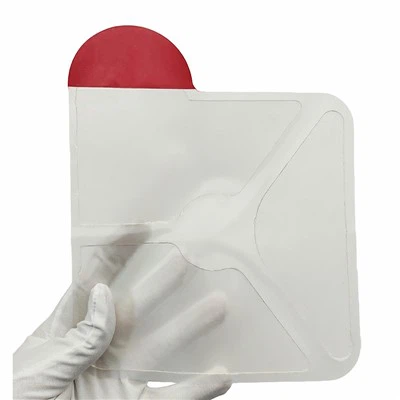
In wound care, an adhesive that can withstand mechanical stress is essential for maintaining a proper seal over the wound. This helps to prevent the entry of bacteria, keep the wound moist, and promote faster healing. Our adhesives are designed to provide reliable adhesion even under the movement of the patient’s body, ensuring the effectiveness of the wound dressing.
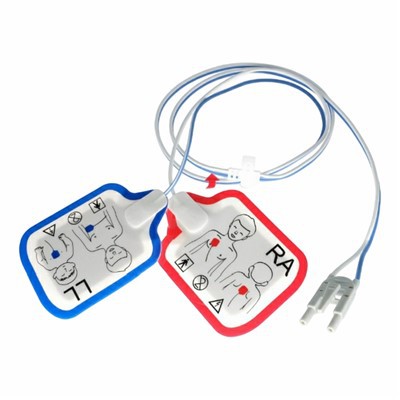
For wearable medical devices, such as continuous glucose monitors and electrocardiogram (ECG) patches, the adhesive must adhere firmly to the skin during normal daily activities. The ability to withstand mechanical stress ensures that the device remains in place, providing accurate and continuous data. Our high – performance adhesives are engineered to meet these requirements, offering long – lasting adhesion without compromising patient comfort.
Conclusion
As a supplier of medical silicone gel adhesives, we understand the critical importance of how these adhesives respond to mechanical stress. Through careful control of factors such as cross – linking density, molecular weight of silicone polymers, and the use of additives and fillers, we are able to produce adhesives that offer excellent mechanical performance in a wide range of medical applications. Our rigorous testing procedures ensure that our products meet the highest standards of quality and reliability.
CGM If you are in the medical industry and are looking for high – quality medical silicone gel adhesives that can withstand mechanical stress, we would love to hear from you. Our team of experts can provide you with detailed information about our products and help you find the best solution for your specific needs. Contact us to start a discussion about your requirements and explore how our medical silicone gel adhesives can enhance your medical applications.
References
- Behl, M.; Dietz, C.; Lendlein, A. “Shape – Memory Polymers: Past, Present, and Future Developments.” Advances in Polymer Science, 2010, vol. 238, pp. 1 – 45.
- Brown, H. R. “Silicones in Medicine and Surgery.” Journal of the Royal Society of Medicine, 1979, vol. 72, no. 3, pp. 197 – 202.
- Ratner, B. D.; Hoffman, A. S.; Schoen, F. J.; Lemons, J. E. “Biomaterials Science: An Introduction to Materials in Medicine.” 2nd ed., Academic Press, 2004.
Shenzhen Omori Biological Technology Co., Ltd.
We’re well-known as one of the leading medical silicone gel adhesive manufacturers and suppliers in China. We warmly welcome you to wholesale high quality medical silicone gel adhesive made in China here from our factory. If you have any enquiry about customized service, please feel free to email us.
Address: Floor4, No43, Langkou Industrial park, Dalang Street, Longhua District, Shenzhen City, Guangdong Province, China
E-mail: wya@omorimed.com
WebSite: https://www.omorimed.com/
