Photochromic optical glasses have become a popular choice among consumers in recent years, offering the convenience of transitioning between clear and tinted lenses based on the level of UV exposure. As a supplier of optical glasses, I’ve had the privilege of witnessing firsthand the growing demand for these innovative products. In this blog, I’ll delve into the science behind photochromic optical glasses, exploring how they work and why they’re a great option for many people. Optical Glasses
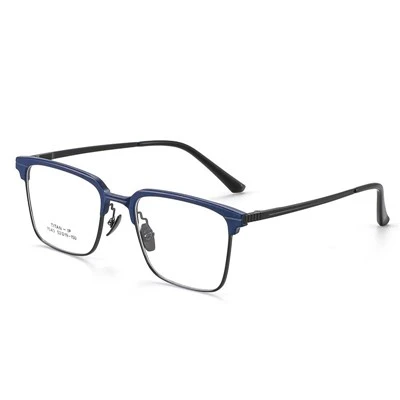
The Basics of Photochromism
Photochromism is a phenomenon where a material changes its color when exposed to specific wavelengths of light, typically ultraviolet (UV) radiation. This change is reversible, meaning the material returns to its original state when the light source is removed or reduced. Photochromic materials are used in a variety of applications, including sunglasses, camera lenses, and even windows.
In the context of optical glasses, photochromic lenses are designed to darken when exposed to sunlight and return to a clear state when indoors or in low – light conditions. This provides the wearer with the benefits of both clear corrective lenses and sunglasses, eliminating the need to switch between two pairs of glasses.
The Chemistry Behind Photochromic Lenses
The key to the photochromic effect lies in the special molecules embedded within the lens material. These molecules, known as photochromic dyes or pigments, are sensitive to UV light. There are two main types of photochromic materials commonly used in optical lenses: organic and inorganic.
Organic Photochromic Materials
Organic photochromic dyes are typically used in plastic lenses. These dyes are made up of complex organic compounds that undergo a structural change when exposed to UV light. When UV photons strike the dye molecules, they cause a rearrangement of the molecular structure. This change in structure alters the way the molecules absorb and reflect light, resulting in a darker color.
For example, some organic photochromic dyes contain spirooxazine or naphthopyran compounds. In their normal state, these compounds absorb light in the ultraviolet region, but when exposed to UV, they transform into a form that absorbs visible light as well, causing the lens to darken. When the UV exposure is reduced, the molecules revert back to their original structure, and the lens becomes clear again.
Inorganic Photochromic Materials
Inorganic photochromic materials, such as silver halide crystals, are often used in glass lenses. Silver halide crystals are tiny particles that are dispersed throughout the glass matrix during the manufacturing process. When UV light hits these crystals, it causes a chemical reaction. The UV photons provide enough energy to break the chemical bonds in the silver halide crystals, releasing silver atoms.
The released silver atoms cluster together to form small silver particles. These silver particles absorb visible light, causing the lens to darken. When the UV light is removed, the silver atoms react with the halide ions in the glass to reform the silver halide crystals, and the lens returns to its clear state.
The Manufacturing Process
The manufacturing of photochromic optical glasses is a precise and complex process. For plastic lenses, the photochromic dyes are either dissolved in the monomer (the liquid material that forms the lens) before the lens is cast or applied as a coating on the surface of the lens.
When the dyes are dissolved in the monomer, they are evenly distributed throughout the lens material. As the monomer is cured (hardened) using heat or light, the dyes become an integral part of the lens. This method ensures that the photochromic effect is consistent across the entire lens.
Applying the dyes as a coating involves depositing a thin layer of photochromic material on the lens surface. This can be done through techniques such as spin – coating or dip – coating. The advantage of a coating is that it can be customized to provide different levels of photochromic performance.
For glass lenses, the silver halide crystals are introduced during the melting process. The glass ingredients are mixed with the silver halide compounds and melted at high temperatures. As the glass cools and solidifies, the silver halide crystals are trapped within the glass matrix, ready to respond to UV light.
Factors Affecting Photochromic Performance
Several factors can influence how well photochromic optical glasses work.
Temperature
Temperature plays a significant role in the photochromic effect. In general, photochromic lenses darken more quickly and to a greater degree in cooler temperatures. This is because the chemical reactions that cause the color change are more efficient at lower temperatures. In warmer conditions, the lenses may not darken as much or as rapidly. For example, on a hot summer day, the photochromic lenses may not reach the same level of darkness as they would on a cool, sunny day.
UV Intensity
The intensity of UV light is another crucial factor. The more intense the UV radiation, the faster and darker the lenses will become. Areas with high altitude and clear skies typically have stronger UV radiation, so photochromic lenses will darken more effectively in these environments. Indoors, where the UV levels are much lower, the lenses will remain relatively clear.
Lens Thickness
The thickness of the lens can also affect the photochromic performance. Thicker lenses may take longer to darken and lighten compared to thinner lenses. This is because the UV light has to penetrate deeper into the lens material to reach all the photochromic molecules. Additionally, thicker lenses may have a more pronounced effect on the overall color change, as there are more photochromic molecules present.
Benefits of Photochromic Optical Glasses
There are several advantages to using photochromic optical glasses.
Convenience
One of the biggest benefits is the convenience they offer. With photochromic lenses, wearers don’t have to carry a separate pair of sunglasses. They can simply walk outside, and their lenses will automatically darken to protect their eyes from the sun. When they go back indoors, the lenses will return to their clear state, allowing for clear vision without any adjustments.
Eye Protection
Photochromic lenses provide protection against both UV and visible light. The UV – absorbing properties of the photochromic molecules help to reduce the risk of long – term eye damage, such as cataracts and macular degeneration. Additionally, the tinted lenses reduce glare, making it more comfortable to drive, play sports, or do other outdoor activities.
Aesthetics
Photochromic lenses offer a sleek and seamless look. Unlike traditional sunglasses, which can look bulky or out of place indoors, photochromic lenses look like regular clear lenses when not exposed to sunlight. This makes them a popular choice for people who want a more stylish and practical eyewear solution.
Why Choose Our Photochromic Optical Glasses
As an optical glasses supplier, we take pride in offering high – quality photochromic products. Our lenses are carefully manufactured using the latest technology and the best materials.
We have a wide range of photochromic options available, including different lens materials (plastic and glass), tints, and levels of photochromic performance. Whether you’re looking for a fast – darkening lens for outdoor sports or a more subtle tint for everyday wear, we have the perfect solution for you.
Our team of experts is dedicated to ensuring that every pair of glasses meets the highest standards of quality and comfort. We also offer personalized service, helping you select the right photochromic lenses based on your specific needs and lifestyle.
Conclusion
Photochromic optical glasses are a remarkable innovation that combines the functionality of clear corrective lenses and sunglasses. By understanding the science behind how they work, consumers can make informed decisions when choosing their eyewear. Whether it’s for convenience, eye protection, or aesthetics, photochromic lenses offer a great solution for many people.
Polarized Sunglasses If you’re interested in learning more about our photochromic optical glasses or would like to discuss potential procurement, we’d love to hear from you. Feel free to reach out to us, and our team will be happy to assist you with all your optical glasses needs.
References
- "Photochromism: Molecules and Systems" by Horst Dürr and Harri Bünzli.
- Scientific papers on photochromic materials in leading optical and material science journals.
Yuhuan Longsen Glasses Co., Ltd.
As one of the most professional optical glasses manufacturers and suppliers in China, we offer a wide range of products with superior quality. Please feel free to buy high quality optical glasses for sale here and get quotation from our factory. We also accept customized orders.
Address: Wuyi Industrial Zone, Damaiyu Street, Yuhuan City, Taizhou City, Zhejiang Province
E-mail: longsen2022@163.com
WebSite: https://www.longsenglasses.com/
