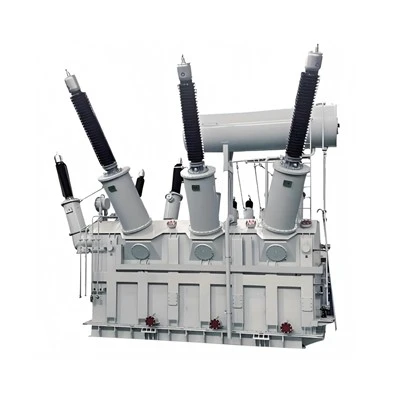
Alright, let’s cut to the chase—if you’re an electrical engineer, plant manager, or safety officer who’s ever had to spec transformers for a facility with even a whiff of flammable stuff, you’ve definitely Googled this question: Can oil immersed transformers even be used in hazardous locations? And if you’ve gotten a bunch of stuffy, jargon-heavy answers that make zero sense for real-world shops, you’re not alone. I run an oil immersed transformer supplier, so I get this question every single week—usually right after a client panics because their last transformer fried in a chemical plant, gas station, or paint shop. Let’s break this down like we’re grabbing coffee, no lab coat required. Oil Immersed Transformer
First, let’s get one thing straight: “hazardous locations” aren’t just a vague term. The NEC (National Electrical Code) over in the US, and IEC standards globally, split these places into zones based on how much flammable gas, vapor, dust, or fiber is hanging around. Zone 0 is the worst—constant, day-and-night presence of flammable stuff. Zone 1 is occasional, like a pump that leaks once a shift. Zone 2 is rare, like a tank that only vents during maintenance. Then there’s dust hazards, too—think grain elevators or coal mines, where fine particles can spark up bad quick. So “hazardous” isn’t a one-size-fits-all box, which is why everyone’s confused about oil immersed transformers here.
Now, the big question: Is oil immersed inherently dangerous for these spots? Let’s start with the oil itself. Most oil immersed transformers use mineral oil, right? That stuff is flammable—its flash point is usually around 140°C (284°F) or higher, but it can catch fire if it gets super hot, or if there’s an arc inside the transformer. Wait, but what about dry-type transformers? Everyone assumes dry-type is safer for hazardous areas, but here’s the tea: dry-type uses air cooling, so its insulation is usually epoxy-based. If that epoxy overheats or cracks, it can release toxic fumes and spark from exposed wires—way faster than oil, which actually smothers small arcs inside the tank. Oil’s also a better insulator, so less chance of internal arcing in the first place, when it’s properly maintained.
But hold on—just tossing a regular oil transformer into a Zone 1 chemical plant? That’s a hard no. Regular oil transformers are built for general industrial use, not hazardous locations. The problem isn’t the oil, it’s the enclosure. A standard transformer has a vent or a gasket that lets air in to cool it, and any tiny crack could let flammable vapors seep inside. If there’s a hot spot or an arc inside, that vapor mix would go boom. So what’s the fix here? We build oil immersed transformers for hazardous locations with specific modifications. Let’s talk about those.
First, explosion-proof enclosures. These aren’t just tough metal boxes—they’re designed so if an arc does happen inside the tank, the blast gets contained, and the pressure dissipates through flame paths—those little gaps between the enclosure parts that cool the hot gases before they escape. No escaping flame means no external explosion. That’s the key difference between a regular transformer and a hazardous-rated one. We also make sure all the wiring connections are sealed tight, no loose terminals that could spark, and we use high-temperature insulation that won’t break down even if the transformer runs a little hot.
Then there’s the oil choice. Wait, you can’t just use regular mineral oil for some of these spots. For Zone 0 locations, where flammable gas is always present, we use high-flash-point oil—like synthetic ester oil, which has a flash point over 250°C (482°F). That’s way harder to light, so even if there’s a leak, it’s not going to ignite. Some clients ask about fire-resistant fluids, and while they’re more expensive, they’re a must for places like underground gas stations or refineries where downtime from a fire could cost millions.
Another big one: monitoring systems. Even a regular oil transformer should have oil level and temperature sensors, but for hazardous locations, we add way more. We use gas detectors that sit inside the enclosure—if the oil starts breaking down (a sign of an internal fault), it releases gases like hydrogen, and the detector picks that up before it becomes a problem. We also use pressure relief valves that vent safely to the outside, not into the surrounding area. No random pressure build-up blowing the tank, which would be a disaster in a flammable space.
Now, let’s get real about when oil immersed is actually the right call, versus dry-type. I’ve had clients come in saying “dry-type is safer, so we want that” for a paint shop. But paint shops have tons of VOC vapors, which are super flammable. Dry-type transformers there have to be totally sealed, but sealed dry-type transformers run hotter because they can’t circulate air, so you need a bigger unit, which costs more. Oil immersed units, on the other hand, run cooler naturally—oil transfers heat way better than air—so they can be smaller, more efficient, and cheaper. The kicker? A properly rated oil immersed transformer for a hazardous location has a lower fire risk than an overworked, under-sized dry-type unit. I see this all the time—clients switch from dry-type to our hazardous-rated oil units and cut their maintenance costs by 30% because there’s less heat-related wear and tear.
But wait, there are lines you can’t cross. You can’t use a standard oil immersed transformer in Zone 0, period. Zone 0 is for equipment that’s inherently non-sparking, and even our best explosion-proof oil units have to go through strict testing—like the IECEx or UL 844 certifications—to get into Zone 0. For Zone 1, our standard explosion-proof oil units work, but only if they’re installed right. Installation matters just as much as the unit itself. We tell clients to put transformers in well-ventilated areas, not near hot pipes or open flames, and to make sure the enclosure is grounded correctly—static electricity is a silent killer in hazardous spots. Also, regular inspections: you can’t just install a transformer and forget it. We offer annual check-ups where we test the oil for moisture or contaminants, check the flame paths on the enclosure, and calibrate the gas detectors. That’s non-negotiable—even the best unit will fail if you skip maintenance.
I’ve got a client in Houston, they run a chemical processing plant, and they tried using dry-type transformers for their Zone 1 area a few years back. The dry-type units kept overheating, and one had a tiny crack in the epoxy that released fumes—they had to shut down production for 12 hours, which cost them like $2 million. They switched to our explosion-proof oil immersed units, and it’s been 4 years now with zero issues. They save $150k a year on energy because the oil units are more efficient, and their insurance premium went down too—insurance companies love seeing rated equipment for hazardous locations.
Another example: a small gas station in the Midwest. They used to have a standard pole-mounted oil transformer, but the local fire marshal made them upgrade because it was near the underground gas tanks. They thought they had to get a tiny dry-type unit, but we hooked them up with a compact, rated oil immersed transformer that fits on the same pole, meets all the code requirements, and didn’t cost twice as much as a dry-type. The fire marshal signed off on it immediately because the unit has a secondary containment pan under it—so if the oil ever leaked, it wouldn’t spill onto the ground near the gas tanks.
Now, let’s bust some myths. Myth #1: Oil is flammable, so oil transformers can’t be used. Fact: The risk is way lower when the unit is enclosed properly, using high-flash oil, and rated for hazardous locations. A properly contained oil fire is nowhere near as dangerous as a dry-type epoxy fire that releases toxic fumes and sparks. Myth #2: Dry-type is always code-approved for hazardous spots. Fact: Only specific, rated dry-type units are, and they have way higher upfront and maintenance costs. Myth #3: All hazardous-rated oil transformers are the same. Fact: Cheap, off-brand units that claim to be “explosion-proof” usually skip the flame path testing or use low-grade oil—we test every single unit in our facility before it leaves, and we have the certification papers to prove it, no cutting corners.
So, circling back to the original question: Can oil immersed transformers be used in hazardous locations? The short answer is yes—if they’re the right model, rated for the specific zone, installed correctly, and maintained regularly. The long answer is that they’re often a better choice than dry-type, especially for locations where space or cost is a concern. I know a lot of suppliers will push dry-type because it’s simpler, but we’re in the business of solving problems, not checking boxes. If you’re working in a hazardous location, don’t fall for the “dry-type is the only safe option” line—ask us about our hazardous-rated oil immersed units, we’ll walk you through what your facility needs, no jargon, no pressure.

If you’re dealing with a facility that’s got flammable stuff lying around, or your current transformer isn’t cutting it, let’s chat. We can send over a free spec sheet, answer any questions you’ve got about ratings, installation, or maintenance, and help you pick the unit that fits your needs and your budget. Don’t waste time on generic stuff that doesn’t meet code—reach out, and we’ll make it right.
Dry-type Transformer References:
- National Electrical Code (NEC) Article 500 – Hazardous (Classified) Locations
- IEC 60076-6 – Power transformers – Part 6: Reactors
- UL 844 – Standard for Safety for Explosion-Proof and Dust-Ignition-Proof Electrical Equipment for Use in Hazardous (Classified) Locations
- IEEE C57.12.00 – Standard for General Requirements for Liquid-Immersed Distribution, Power, and Regulating Transformers
Ruibian (Jiangsu) Electric Power Co., Ltd.
Ruibian (Jiangsu) Electric Power Co., Ltd. is one of the most professional oil immersed transformer manufacturers and suppliers in China, featured by quality products and good price. Please rest assured to buy durable oil immersed transformer in stock here from our factory. Contact us for pricelist.
Address: No. 69 Huayuan Avenue, Hai’an City,Jiangsu Province, China
E-mail: business@ruibianjiangsu.cn
WebSite: https://www.ruibianpower.com/
