If you’ve ever stood in a manufacturing plant, rummaging through a workshop supply closet, or even installed a kitchen cabinet, you’ve probably grabbed an insulating edge strip without giving it much thought. These thin, unassuming pieces are workhorses—they seal edges from moisture, dust, wear, and even electrical current, all while smoothing out a sharp, unfinished cut. But here’s the thing: not all edge strips are created equal. As a supplier that’s focused exclusively on ABS insulating edge strips for over a decade, I’ve seen firsthand how choosing the wrong material can turn a small fix into a costly headache. Today, I want to break down exactly how ABS stacks up against the other big names in edge strip materials: PVC, PP, and even mild metals like aluminum. No jargon, no sales fluff—just the real-world differences that matter for manufacturers, cabinet makers, and anyone who relies on edge strips to keep their products reliable. ABS Insulating Edge Strips
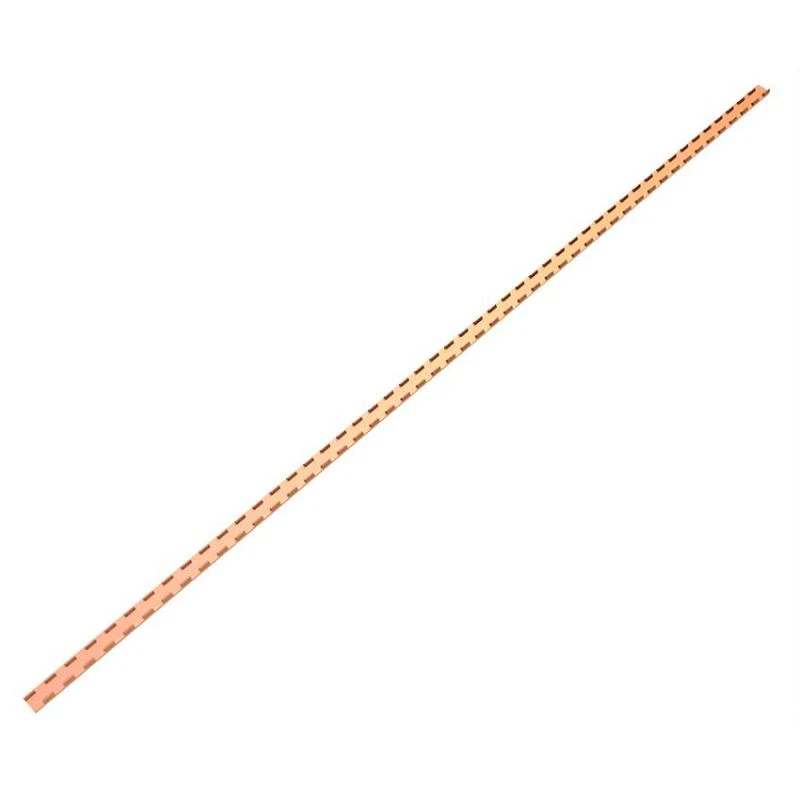
Let’s start with the basics, because that’s where most of the confusion starts. Edge strips aren’t one-size-fits-all, and the material you choose depends on what your product actually needs to survive. A kitchen cabinet edge, for example, is going to face way more steam, spills, and daily bumps than the edge of a desk that’s rarely moved. An electrical panel edge needs to insulate against current, while a children’s toy edge needs to be soft enough not to cause injury. That’s where ABS comes in, but before we get to why it’s my go-to, let’s talk about the other materials I see companies reaching for, time and time again.
First up: PVC, or polyvinyl chloride. It’s the most common edge strip material out there, and for good reason—it’s cheap, flexible, and easy to mold into all kinds of shapes. But PVC has a dark side most people don’t think about until it’s too late. For starters, it’s not as rigid as ABS, so if you’re cutting a piece of particleboard or MDF that has a perfectly sharp, square edge, PVC can warp or pull away over time. I’ve had a customer reach out to me three years ago, panicking because all their PVC edge strips on outdoor patio cabinets were curling at the ends. Turned out, PVC breaks down in UV light—something ABS handles way better. PVC also emits volatile organic compounds (VOCs) when it’s heated, which is a huge red flag for indoor products like furniture or toys. If you’re making something that goes inside a home or school, PVC’s off-gassing isn’t just a minor inconvenience—it’s a health risk. And don’t even get me started on electrical insulation: PVC has a lower dielectric strength than ABS, meaning it can let small amounts of current seep through if it’s exposed to high voltage. For companies making electrical enclosures, that’s a non-negotiable dealbreaker.
Next is PP, or polypropylene. It’s super lightweight, which makes it popular for things like packaging or small consumer goods. But PP is one of the most flexible plastics around, so it’s terrible for edge strips that need to hold their shape. I once worked with a customer who tried PP edge strips for their custom closet organizers; six months later, the strips were so floppy that they were poking out at odd angles, catching on hangers and making the whole unit look cheap. PP also has a very low melting point—around 320 degrees Fahrenheit—so if your product is going near a stove, a heater, or even a workshop tool that gets hot, PP will soften and deform. That’s a hard pass for kitchen or automotive parts. PP is also more porous than ABS, so it absorbs moisture over time. For bathroom cabinets or outdoor furniture, that moisture can seep into the particleboard underneath, causing it to swell and crack—something ABS edge strips, which are non-porous, will never let happen.
Then there’s metal edge strips, usually aluminum or steel. These are rigid, durable, and look sleek, especially for modern industrial designs. But they conduct electricity—badly. If you’re using a metal edge strip on a product that even comes into contact with power, you’re creating a shock hazard. I’ve had a few electrical clients ask about metal strips, and every time I have to remind them that even a tiny scratch in the metal can expose the conductive core, leading to serious safety issues. Metal is also way heavier than plastic edge strips, which adds unnecessary cost for shipping and installation. And let’s talk about cost: metal edge strips aren’t cheap, especially if you need custom sizes or finishes. For most small to medium manufacturers, the price tag for metal strips is just not worth the trade-off in weight and safety.
Now, let’s get back to ABS—acrylonitrile butadiene styrene, for the uninitiated. ABS is a thermoplastic, which means it’s moldable when heated but hardens into a rigid, durable shape when it cools. That balance of flexibility when processing and rigidity when finished is why it’s perfect for insulating edge strips. Let’s break down the specific advantages that set ABS apart from all the materials I just mentioned, based on what I’ve seen in my years supplying these strips.
First, mechanical strength and shape retention. ABS has a tensile strength of around 4,000 psi, which is double that of PVC and way higher than PP. That means when you press an ABS edge strip onto a sharp, square particleboard edge, it stays put. It doesn’t warp, curl, or pull away, even after years of being bumped, scraped, or exposed to temperature changes. I had a medical equipment manufacturer use our ABS edge strips on their tabletops three years ago, and they just sent me a note saying not a single strip has failed—something they couldn’t say about their old PVC strips, which were breaking every six months from being moved around hospital rooms. That kind of reliability is huge for any industry where downtime costs money.
Second, insulation performance. This is where ABS really shines as an insulating edge strip, not just any edge strip. Dielectric strength, which is the measure of how well a material resists electrical current, is around 400 volts per mil for ABS. For context, PVC is around 250 volts per mil, and PP is even lower—around 200 volts per mil. That difference might sound small, but in real use, it means ABS can safely insulate edges against 30% more voltage than PVC, and 50% more than PP. For electrical enclosures, circuit boards, or any product that handles power, that’s non-negotiable. I also want to mention thermal insulation, not just electrical. ABS has a lower thermal conductivity than metal, so it doesn’t transfer heat from hot surfaces like a metal strip would. That means the edge of your product stays at a safe temperature to touch, even if it’s on a stove or next to a heater.
Third, resistance to environmental factors. ABS is UV-stabilized, so it doesn’t break down when exposed to sunlight—unlike PVC, which turns yellow and crumbles after a few months outdoors. It’s also water-resistant, which means it won’t absorb moisture like PP. I had a landscaping company use our ABS edge strips on their outdoor planter edges, and they told me last year that even after a full year of rain, snow, and 100-degree summer heat, the strips looked brand new. PVC strips they tried before turned yellow and started peeling within six months. ABS is also chemical-resistant, so it won’t break down from common household chemicals like cleaning products, solvents, or even the oil from a workshop floor. That makes it perfect for kitchens, bathrooms, garages, or any space where chemicals are present.
Fourth, processing and versatility. ABS is easy to mold into custom shapes, colors, and finishes, which is a big plus for manufacturers who want branded products. Unlike metal strips, which are only available in a few standard finishes like brushed aluminum, ABS can be colored to match any wood grain, painted, or even given a matte or high-gloss finish. It’s also easy to cut and install, so cabinet makers and DIYers can work with it just as easily as professionals. And the cost? ABS is way cheaper than metal, and only slightly more expensive than PVC—so you get better performance without breaking the bank.
But wait—does ABS have any downsides? No material is perfect, and I want to be honest with you. ABS does melt at around 220 degrees Celsius, so it’s not ideal for products that will be exposed to extreme heat, like furnaces or industrial ovens. For those applications, you’d want to look at something like fiberglass-reinforced plastic, not ABS. And while it’s flexible enough to bend around curved edges, it’s not as bendy as PVC, so if you need a very flexible strip for a curved or irregular edge, PVC might be a better fit. But for 90% of the edge strip applications I see—cabinetry, furniture, electrical enclosures, medical equipment, retail displays—ABS is the clear choice.
I’ve learned over the years that most manufacturers choose edge strips based on price alone, not on performance. But that’s a mistake. A $0.01 cheaper strip that fails after a year costs you more in replacements, labor, and lost customers than investing in a higher-quality strip that lasts 10 years. That’s why we focus exclusively on ABS insulating edge strips—because we’ve seen too many companies get burned by choosing cheaper materials that don’t hold up. Whether you need straight strips for a cabinet, curved strips for a countertop, or custom sizes for a one-off project, our ABS edge strips meet all the safety and performance standards you need.

If you’re tired of edge strips that warp, peel, or fail when you need them most, let’s talk. We work with small cabinet makers and large industrial manufacturers alike, and we can help you find the right size, finish, and thickness of ABS insulating edge strips for your project. No hidden fees, no minimum orders for most standard sizes, just high-quality materials that do exactly what you need them to do. Reach out to us to discuss your requirements, and we’ll provide a custom quote tailored to your needs.
PP Insulating Edge Strips References:
- Harper, C. A., & Petrie, E. M. (2003). Plastics Materials and Processes: A Concise Encyclopedia. Wiley-Interscience.
- Crawford, R. J. (1998). Plastics Engineering. Butterworth-Heinemann.
- electrical Insulation Handbook. (2019). Institute of Electrical and Electronics Engineers (IEEE).
- UV Durability of Polymer Materials. (2021). American Society for Testing and Materials (ASTM) International.
AATI Cathode Co., Ltd.
AATI Cathode Co., Ltd. is one of the leading abs insulating edge strips manufacturers and suppliers in China. We warmly welcome you to buy high-grade abs insulating edge strips made in China here from our factory. All customized products are with high quality and competitive price. Contact us for free sample.
Address: NO. 1, ZHENXING ROAD, BAOJI CITY, SHAANXI, CHINA
E-mail: ivy@bjaati.com
WebSite: https://www.bjcathode.com/
