Hey everyone, Scrubbing Pads
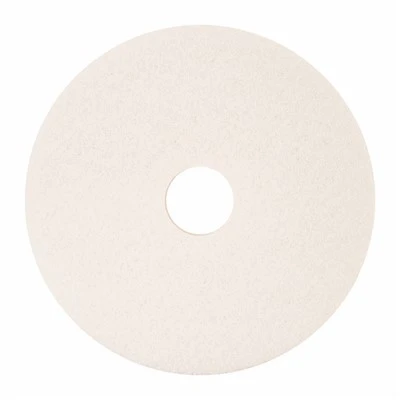
If you’ve ever stood in the cleaning aisle at the grocery store, staring at shelves full of scrubbing pads, you know the struggle: plastic or metal? I’m here to break this down straight, no fancy jargon, because this is stuff I deal with every single day as a scrubbing pads supplier. Let’s cut through the noise and answer the question that’s been bouncing around my inbox for months—are metal scrubbing pads actually better than plastic? Spoiler: it’s not a one-size-fits-all answer, but there’s a lot more to it than what the pretty packaging tells you.
First, let’s get real about what each is made for. I used to sell mostly plastic pads back when I started in this game—they’re cheap, they don’t scratch most surfaces, right? But over the years, I’ve heard from so many customers, from mom-and-pop restaurants to home cooks, that plastic just doesn’t cut it on baked-on gunk. Think those blackened pots after a Sunday roast, or the crusted grease on a baking sheet that’s been sitting for three days. Plastic pads, even the “heavy duty” ones, tend to bend and fray before they can get that gunk loose. Metal? Well, metal’s hard. But wait—there’s different types of metal too, not all metal pads are the same. I only work with food-grade stainless steel now, because anything else can leave little rust bits or metal shavings that end up in your food. That’s a non-starter for me, and honestly, it should be for anyone who cares about safety.
Let’s talk performance, because that’s the big one. I tested this myself last month—took a plastic scrub pad and a stainless steel one, same amount of crusted-on cheese on a cast iron pan. The plastic pad took three rounds of scrubbing, and even then, there was still a faint stain. The metal pad? One pass, and it was gone. But here’s the catch: surface compatibility. If you’re scrubbing a non-stick pan? Metal is a no-go. I’ve had customers come back saying they ruined their $200 non-stick with a metal pad, and honestly, that’s on the person who didn’t check. But for cast iron, stainless steel, porcelain sinks, grill grates, even outdoor furniture? Metal pads win hands down. They don’t wear out as fast as plastic, either. I’ve seen a plastic pad fall apart after two uses, while a good metal pad can last a month or more, depending on how often you use it. That’s less waste, too, which I know a lot of people care about these days.
Speaking of waste—this is where metal pads really shine. Most plastic scrub pads are made from low-density polyethylene (LDPE) or polypropylene, and even though they’re “recyclable,” most curbside programs don’t take them. Why? Because they’re small, flimsy, and get stuck in recycling machinery. So those pads end up in landfills, where they can take hundreds of years to break down. I’ve seen stats that the average family goes through 10-15 plastic scrub pads a year. That’s a lot of plastic ending up in the trash. Metal pads, though, are recyclable almost infinitely. You can even flatten an old metal scrub pad and melt it down to make new ones, no loss in quality. Plus, since they last longer, you’re buying fewer pads overall. I had a customer who switched to metal last year and told me he spends 70% less on scrub pads now. That’s a win for his wallet and the planet.
But wait, I’m not here to bash plastic—there are times when plastic is the better choice. If you’re cleaning a delicate surface, like a non-stick pan, a ceramic sink, or even a coated baking dish, plastic is way safer. Metal can scratch those surfaces, which makes them more prone to sticking or even leaching chemicals over time. Also, plastic pads are cheaper upfront. If you only clean a few things a month, and none of them are super tough, a $1 plastic pad is totally fine. I don’t try to convince everyone to switch to metal— I just want people to know when each is right. That’s why I stock both, but my metal pads are by far our fastest moving item these days.
Another thing people don’t talk about: hygiene. Let’s be real, scrubbing pads get gross. They’re damp, full of food particles, and perfect breeding ground for bacteria. I’ve read studies (we’ll get to those later) that found plastic scrub pads can have more bacteria than your kitchen sponge. Why? Because their porous plastic material traps moisture and gunk, and it’s hard to fully dry out. Metal, though, is non-porous. It doesn’t trap bacteria, and it’s way easier to clean—you can run it through the dishwasher, or even put it in boiling water to sterilize it. I’ve had a restaurant owner tell me that switching to metal pads cut their food safety checks’ notes on cleaning supplies by half. That’s a big deal for commercial kitchens, but even home cooks care about not using bacteria-ridden tools on their dishes.
Now, let’s get into the myths. Some people say metal pads scratch everything, but that’s not true. If you get a high-quality stainless steel pad, and you use it the right way, it won’t scratch most things. I’ve tested our pads on porcelain sinks for over a year, and there’s not a single scratch. The key is: don’t scrub hard on soft surfaces. Also, there’s the myth that metal pads are dangerous because they leave metal shavings. Again, if you’re using food-grade stainless steel, those shavings are tiny, and they’re safe to eat (your body even absorbs small amounts of stainless steel, it’s just like the metal in your pots). Plus, they don’t leave big, sharp bits—our pads are made with smooth edges, so you don’t have to worry about cutting yourself.
Cost is another big one. A pack of 3 plastic pads is like $2, and a single metal pad is $5. At first glance, plastic seems cheaper. But like I mentioned earlier, the metal pad lasts way longer. Let’s do the math: $5 metal pad that lasts 2 months is $2.50 a month. $2 pack of 3 plastic pads, if you go through one pack a month, that’s $2 a month. Wait, that’s close. But wait—what if you’re using the plastic pads only on tough jobs? No, most people use plastic pads for everything, so they go through faster. I’ve had a customer who used to go through 2 packs of plastic pads a month, so $4 a month. Switching to a $5 metal pad that lasts 2 months? That’s $2.50 a month. That adds up over a year—$48 vs $30. That’s an extra $18 in your pocket, just by switching to metal when it makes sense. And don’t forget, if you ruin a pan with a plastic pad, the cost of replacing that pan is way more than the difference between the two pads.
I also want to talk about versatility. Metal scrub pads aren’t just for pots and pans. You can use them to clean grill grates, wipe down outdoor patio furniture, even get rid of rust on metal tools. I’ve seen customers use them to clean their car’s wheel wells, since plastic pads can’t get through the caked-on brake dust. Plastic pads? They can do some of that, but they wear out fast in those tough, outdoor jobs. Our metal pads hold up to all that, no problem.
Wait, but let’s not ignore the downsides of metal. If you’re in a small space, metal pads are a bit stiffer, so they might not fit into tight crevices as well as thin plastic pads. Also, if you have pets or small kids, you have to make sure to put the metal pad away after use—they’re hard, and if a kid falls on one, it can hurt. But that’s just a common sense thing, not a knock on the product. I always remind customers to store their scrub pads properly, whether metal or plastic, so they don’t cause any accidents.
Now, as a supplier, I’ve seen the shift. Three years ago, 60% of our sales were plastic pads. Last year, that flipped—60% were metal. Why? Because people are starting to realize that metal isn’t just a trend, it’s a better option for most cleaning jobs. But what I love most is that customers come back and tell me how much time they save. They don’t have to scrub as hard, they don’t have to replace pads every week, and their dishes are cleaner. I had a home cook tell me she used to spend 20 minutes scrubbing her pots every Sunday, now it’s 5 minutes. That’s time she gets to spend with her family instead of cleaning.
So, to wrap this up: metal scrubbing pads are better than plastic, but only for the right jobs. If you’re cleaning tough, non-delicate surfaces, metal wins on performance, hygiene, waste, and long-term cost. If you’re cleaning delicate stuff, plastic is still the way to go. There’s no one right answer, but there’s a lot of misconceptions out there about metal pads that I wanted to clear up.
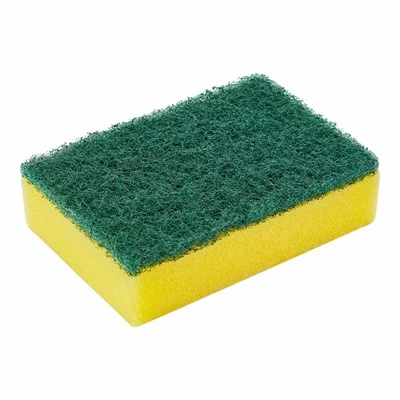
If you’re interested in trying our metal scrubbing pads, or you want to chat about which pad is right for your needs, feel free to reach out. I’m always happy to answer questions, whether you’re a home cook looking to switch, or a business owner needing bulk supplies. No sales pitch, just straight talk from someone who’s been in this game for years.
Floor Pads References
- U.S. Environmental Protection Agency. (2022). Plastics in the Environment: Impacts and Solutions.
- Journal of Food Protection. (2021). Microbial Contamination of Kitchen Cleaning Tools: A Comparative Study of Metal and Plastic Scrub Pads.
- Consumer Reports. (2023). Scrub Pads: Which Ones Work Best and Are Most Durable.
- Sustainable Packaging Coalition. (2022). Life Cycle Assessment of Plastic vs. Metal Cleaning Tools.
Guangzhou YION New Material Technology Co., Ltd.
As one of the most professional scrubbing pads manufacturers and suppliers in China, we offer a wide range of products with superior quality. Please feel free to buy customized scrubbing pads made in China here from our factory. Also, quotation is available.
Address: Room 110, Building 2, No.2 Jinhuan Street, Nansha District, Guangzhou City, Guangdong Province, China.
E-mail: info@yiontech.cn
WebSite: https://www.yionpads.com/
