If you’ve ever worked with plastic tubing for fluid handling, medical devices, or industrial process systems, chances are you’ve run into FEP tubes. FEP (fluorinated ethylene propylene) is popular for good reason—it’s chemically resistant to almost every common solvent, has excellent thermal stability (it works from -40°F to 400°F), and is non-stick, non-leaching, and resistant to UV radiation. But one question I get asked almost daily by engineers, production managers, and hobbyists alike is: Can FEP tube be connected to barbs? As a FEP tube supplier with over 12 years of experience working with this material across hundreds of applications, I’m here to give you a straight, practical answer—not just the textbook science, but the real-world insights you need to avoid leaks, downtime, and wasted materials. FEP Tube
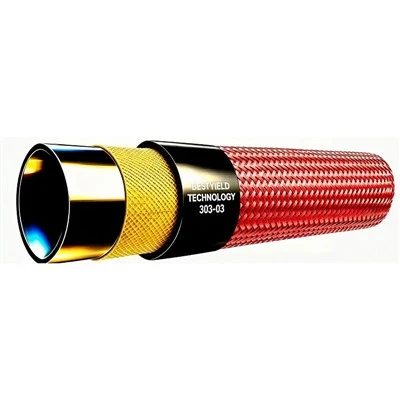
First, let’s break down what makes FEP unique, because that’s the root of why connecting it to barbs is sometimes tricky, sometimes easy, and always depends on how you approach the job. Unlike softer plastics like PVC or LDPE, FEP is semi-rigid when cold, with a low coefficient of friction that makes it resistant to sticking to other surfaces. It also doesn’t melt or deform easily under pressure, which is great for performance but means it won’t “flop” over a barb the way a more flexible tubing would. Barbs, for those new to the term, are those ridged, spiked fittings you see on everything from aquarium pumps to medical fluid lines to pneumatic tools. They’re designed to create a mechanical grip on tubing when you slide the tubing over them, often with a clamp to hold it tight, because the barb’s ridges dig into the tubing’s outer wall to prevent disconnection under pressure.
So the short answer is: Yes, FEP tube can be connected to barbs—but it’s not as simple as just sliding the tube on and tightening a hose clamp. I’ve seen too many people try that, only to have the FEP crack, leak, or slip off within days. Last year, for example, I worked with a team at a specialty chemical lab that had tried to use our 1/4-inch OD FEP tubing with standard plastic barbs for a solvent transfer line. They used the same technique they’d used for PVC tubing, just pushing the FEP on by hand and tightening a worm gear clamp. Within a week, half the connections had failed, sending gallons of ethanol onto their lab floor and forcing them to shut down operations for 12 hours to fix the mess. Why did that happen? Because FEP’s low surface energy and semi-rigidity mean it doesn’t conform to the barb’s uneven ridges the way softer plastics do. Hand-tightening a clamp only compresses the very outer layer of the FEP, not enough to create a tight, permanent seal that can handle even moderate pressure.
Now, let’s get into the best methods for connecting FEP to barbs, based on applications we’ve proven successful with over thousands of installations. The first step is choosing the right barb fitting in the first place. Not all barbs are created equal, and pairing the wrong barb with FEP is half the battle. For FEP tubing, I always recommend using barbs made of materials that can handle FEP’s working temperature and chemical resistance first, and second, have a design that works with rigid, low-friction tubing. Stainless steel barbs are our top recommendation for most industrial and high-pressure applications because they’re durable, corrosion-resistant, and have sharper, more defined ridges than plastic barbs. Wait—sharper ridges? That sounds counterintuitive, right? But FEP is semi-rigid, so sharper ridges can actually bite into the FEP’s outer wall when you apply the right force, rather than just slipping across the smooth FEP surface. Plastic barbs work for low-pressure, low-temperature applications, like aquarium air lines or mild water transfers, but make sure they’re made of a high-density plastic (HDPE or polypropylene) with at least two to three evenly spaced ridges—too many ridges will make it harder to slide the tubing on, too few won’t create enough grip.
The next critical step is preparing the FEP tubing before connecting it to the barb. This is where most people go wrong. FEP tubing has a smooth, non-porous outer surface that doesn’t grip well, so you can’t just slide it over a cold barb. The two most common preparation methods are heating and lubricating, and which you use depends on your tubing size and application. For standard wall FEP tubing, heating is the most reliable method. I always tell customers to use a heat gun set to around 300°F to 350°F (never hotter than 400°F, or you’ll melt or deform the FEP), and to heat the end of the FEP tube for 10 to 15 seconds, until the outer wall is soft enough to stretch slightly. You’ll know it’s ready when you can press the tube wall gently with your finger and it springs back slowly, not instantly. Once it’s warm, you can easily slide the tubing over the barb to the point where the barb’s widest ridge is centered inside the tube. Hold the tubing in place for 10 seconds as it cools, and it will snap back to its original diameter, creating a tight, mechanical grip around the barb’s ridges. Add a hose clamp for extra security, but for most low-to-medium pressure applications, the heated connection alone is enough.
Lubrication is another method, perfect for very small diameter FEP tubes (1/8-inch ID or smaller) that might be too thin to heat without warping. For this, you’ll need a lubricant that’s compatible with FEP and your application: for water or air lines, mild dish soap or silicone-based lubricant works perfectly; for chemical lines, we recommend using an inert lubricant like perfluorinated grease (PFG), which won’t react with FEP or the fluids you’re transferring. Apply a thin, even layer of lubricant to the inside of the FEP tube and the outer surface of the barb, then slide the tube on by hand. The lubricant reduces friction enough to let the FEP conform to the barb’s ridges, creating a solid grip. Just make sure you wipe off any excess lubricant after installation to avoid contamination of your process fluid.
Now, what about the limits? There are some cases where connecting FEP to barbs simply isn’t the best option, and it’s important to know these to avoid costly mistakes. First, high-pressure applications—anything over 100 PSI, for example. Even with the best heated or lubricated connection, FEP’s semi-rigidity means it won’t create a seal strong enough to hold up to sustained high pressure, and you risk the tube bursting or slipping off. For those cases, we recommend using compression fittings or flare fittings designed specifically for FEP tubing, which create a tighter, pressure-rated seal. Second, extreme temperature applications over 400°F or below -40°F. At high temperatures, FEP becomes too soft to hold its shape around a barb, and at low temperatures, it becomes brittle and prone to cracking when bent or stretched around a fitting. Third, applications with highly viscous fluids or aggressive chemicals that can get trapped between the barb’s ridges and the FEP wall. Over time, this can erode the FEP or cause the connection to fail, so for these, a bonded or welded connection is better.
I also get asked a lot about the difference between connecting regular FEP and PTFE tubing to barbs, since people often mix the two up. FEP is slightly more flexible than PTFE (Teflon) but still more rigid than other plastics, so the same preparation methods apply, but FEP has a lower melting point, so you need to be careful with heat to avoid warping. PTFE is even more rigid, so heating it will require a slightly higher temperature (around 400°F) and more time, and it’s more prone to cracking, so lubrication is often preferred for PTFE barbs connections.
Over the years, I’ve seen dozens of customers try to skip these steps and end up paying the price. Last year, a food and beverage manufacturer tried to use our 3/8-inch OD FEP tubing for a soda syrup line, and decided to skip heating, just pushing the tube onto plastic barbs and tightening a clamp. Within two weeks, the connection leaked, contaminating 500 gallons of syrup and forcing a production shutdown that cost them over $15,000. When they called me to fix the problem, I showed them the heated barb method: we heated the end of the FEP tube for 12 seconds, slid it over stainless steel barbs, let it cool, and those connections have held for 18 months with zero issues. The difference was just taking the time to prep the FEP properly.
Another common mistake is choosing tubing with the wrong inner/outer diameter for the barb. FEP tubing’s dimensions are critical—if your barb is made for 1/4-inch OD tubing, don’t try to use it with 5/16-inch OD FEP, even if you can force it. The wrong size will mean the FEP can’t conform to the barb’s ridges, leading to leaks. Always match the barb’s OD to the FEP’s nominal OD, and for precision applications, use the actual measured OD of your tubing, as some manufacturers have slight variations in their sizing.
So to circle back to the original question: Can FEP tube be connected to barbs? Yes, absolutely—when you use the right barb, prepare the tubing correctly, and follow installation best practices. It’s a cost-effective, reliable connection method for low-to-medium pressure, moderate temperature applications like air lines, water transfers, mild chemical processing, and even some medical devices. But it’s not a one-size-fits-all solution, and skipping the proper preparation steps will almost always lead to failure.

If you’re working on a project and aren’t sure whether a barb connection is right for your FEP tubing, or you need help choosing the right fittings and installation method for your specific application, my team and I are here to help. We’ve supported thousands of customers across industries, from small hobbyist projects to large industrial manufacturing facilities, and we can provide customized guidance, high-quality FEP tubing, and compatible fittings to make sure your connections are leak-free and long-lasting. Whether you need a sample of FEP tube to test, technical specifications for your design, or help troubleshooting an existing connection, don’t hesitate to reach out to our team to discuss your needs and get the support you deserve.
PTFE Tube References
- “Fluoropolymer Properties and Selection Guide,” DuPont Performance Polymers, 2021.
- “Tubing Fitting and Connection Handbook,” Parker Hannifin Corporation, 2022.
- “Fluid Handling System Design: Best Practices for Plastic Tubing Connections,” Society of Manufacturing Engineers, 2020.
- “Chemical Resistance Guide for Industrial Tubing and Fittings,” Saint-Gobain Performance Plastics, 2023.
BESTYIELD Technology (Huizhou) Co., Ltd.
BESTYIELD Technology (Huizhou) Co., Ltd. is one of the most professional fep tube manufacturers and suppliers in China, featured by quality products and good price. Please rest assured to buy durable fep tube made in China here and get quotation from our factory. Customized orders are welcome.
Address: Yinshan Industrial Zone, Liangjing Town, Huiyang District, Huizhou City, Guangdong Province
E-mail: rick@bestyield.net
WebSite: https://www.bestyield.org/
