If you’re a pharma brand owner or formulator sourcing PDE-5 inhibitor APIs, you’ve probably wondered at some point: “Does my supplier actually test these raw materials before sending them my way?” Let me pull back the curtain a little— I’ve been in the PDE-5 API game for 12 years, and I can tell you it’s not just a checkbox exercise. It’s the make-or-break step that separates a good supplier from one that cuts corners to save a buck. PDE-5 Inhibitor APIs
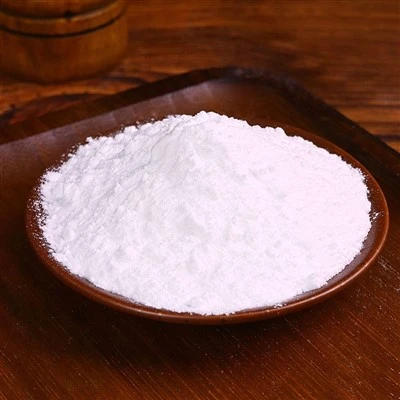
First, let’s get what PDE-5 inhibitors even are, real quick. They’re the backbone for drugs that treat ED, pulmonary arterial hypertension, even some rare blood disorders—think sildenafil (Viagra’s active), tadalafil (Cialis), vardenafil, and the newer analogs that pop up now and then. But these are active pharmaceutical ingredients, not generic Tylenol. The difference is, a tiny impurity can flip a safe drug into something risky, or make it completely ineffective. So yeah, testing isn’t optional. It’s the law.
Let’s walk through the process, step by step, because that’s where the messy, real work happens. First, right after we finish manufacturing a batch of API—whether it’s sildenafil or one of the lesser-known ones—we don’t just stick it in a container and ship it. We pull a sample, and that sample goes through a litany of tests that aren’t the same as the “basic quality checks” some smaller, less transparent suppliers brag about.
First up is identity testing. Wait, I know that sounds dumb—you make the API, how would it not be the right compound? But here’s the thing: sometimes during manufacturing, byproducts form that are almost identical. Like, a tadalafil byproduct has a molecular structure so close to the real thing that a quick visual or even a basic HPLC test might miss it. We use two methods here: HPLC (high-performance liquid chromatography, the workhorse of pharma testing) and NMR (nuclear magnetic resonance). NMR is super precise—it tells you the exact arrangement of every atom in the molecule. If there’s even one misplaced oxygen, NMR picks that up. Last year, a new supplier sent us a batch of tadalafil that showed up as 98% correct on HPLC, but NMR caught a tiny structural shift. Saved us from shipping something that would’ve messed up our customers’ formulations. That’s the kind of check you can’t skip.
Next, impurity testing. This is where so many suppliers cut corners. Regulatory bodies like the FDA and ICH (International Council for Harmonisation) set strict limits for every single related compound, residual solvent, heavy metal, you name it. For PDE-5 APIs specifically, the ICH has a category for genotoxic impurities—these are the ones that can cause DNA damage. I remember a few years back, a big generic pharma got a recall because their supplier didn’t test for a genotoxic byproduct in sildenafil. The cost? Millions in recalls, brand damage, and a hit to their stock. We don’t mess around here. We test for every possible residual from our solvents—methanol, dichloromethane, whatever we use in manufacturing—and make sure they’re below the ICH Q3C limits. For heavy metals (lead, arsenic, cadmium, all the bad stuff), we use ICP-MS (inductively coupled plasma mass spectrometry) which can detect parts per billion. That’s like finding a single grain of sand in a dump truck full of rice.
Then there’s purity and assay. Purity is how much of the actual API is in the batch, not the byproducts. Assay is how active that API is—if the assay is too low, your customer has to add more to their formulation, which can cause side effects; too high, and they might accidentally overdose. For PDE-5 inhibitors, assay has to be between 98.0% and 102.0% of the labeled amount, per FDA guidelines. We run HPLC twice—once right after manufacturing, once again right before packaging—to confirm that. We also do dissolution testing? Wait, no—dissolution is for finished drugs, but for APIs, we do particle size distribution and bulk density. Why? Because if your API particles are all clumpy, your customer can’t mix them evenly into their tablets or capsules. That leads to inconsistent dosing, which is a huge problem for patients. I’ve had a customer tell us they switched to a supplier with bad particle size, and their first batch of tablets had some with 50% of the correct dose and some with 150%. They had to pull the whole lot. That’s the kind of headache we avoid by testing particle size ourselves.
Wait, what about stability testing? A lot of people forget this. Even if a batch passes all tests when it comes off the line, it might degrade during shipping or storage. We don’t just test once. We put samples of every manufactured batch under accelerated conditions—40°C, 75% humidity—for six months, then retest. And we keep long-term stability samples at 25°C for two years, just in case our customer stores the API for a while before using it. Last year, we had a batch of a newer PDE-5 analog that started to degrade a tiny bit after three months at accelerated conditions. We caught that before shipping, adjusted our packaging (added a desiccant, changed the seal), and re-tested. If we’d sent that as-is, by the time our customer used it, it would’ve been below the required purity level. That’s not just good for us—it’s good for them, and good for the patients who take the final drug.
Now, let’s talk about regulatory stuff, because this isn’t just our rules. The FDA, EMA, TGA—they all require that APIs are tested in cGMP (current Good Manufacturing Practices) facilities, with documentation that every test was done correctly, by qualified people, in validated labs. A lot of small API suppliers outsource all their testing, or do it in-house with uncalibrated equipment. We have an in-house lab with calibrated HPLC, NMR, ICP-MS—all the gear—and every test is documented in a batch record that’s auditable for regulators. If a customer comes to us with a FDA audit, we can hand over every single test result, every calibration log, every stability study. No exceptions. I’ve had a new customer ask for a full batch package before they even place an order—we send it without hesitation, because we know our tests hold up.
Wait, but here’s the question: do all suppliers do this? No. I’ve seen suppliers that cut corners on impurity testing, skip stability studies, or even fake test results. A few years back, there was a case in the EU where a batch of vardenafil APIs had 12% of a toxic byproduct, and the supplier had forged test reports. The end drugs were pulled from shelves, and the supplier lost their license. That’s why when a pharma company is sourcing, they need to ask specific questions: what tests do you run? Do you do identity with NMR, or just UV? Do you test for genotoxic impurities? Do you retain stability samples? If a supplier can’t answer those clearly, or tries to brush them off, run the other way.
Let me also be honest with you—testing adds cost. We’re not the cheapest PDE-5 API supplier out there. But you get what you pay for. The supplier that skips tests might offer a lower price, but the risk to your brand, your patients, and your bottom line is way higher. I’ve had a customer come to us after a bad experience with a cut-rate supplier. They told me that the “API” they got was only 70% sildenafil, and had impurities that made their drug cause severe headaches in patients. They spent $2 million recalling their product, and lost a third of their market share. That’s not a risk worth taking.
So what happens after we do all these tests? If the batch passes every single one, with results within all regulatory limits, we issue a Certificate of Analysis (CoA) that includes every test result. That CoA is what our customer submits to their own regulatory bodies when they file for approval of their finished drug. If the batch fails? We don’t ship it. We reprocess it, or if it’s beyond salvage, we destroy it. No exceptions. We’d rather scrap a batch than ship something that doesn’t meet our standards. We’ve had a few batches fail over the years—one time, a residual solvent test came back 1% over the limit, and we had to dump 500 kg of API. It stung financially, but it was the right call. Our customers trust us, and that’s worth more than a one-time win.
Now, if you’re a pharma brand owner, formulator, or even a contract manufacturing organization looking for a reliable PDE-5 API supplier, you don’t have to go through the stress of checking every box on your own. We already do the heavy lifting—every batch is tested, documented, and verified before it leaves our facility. We know that your reputation is on the line, just like ours, so we don’t cut corners on quality.
If you’re tired of suppliers that treat testing like an afterthought, and want to work with a partner that actually cares about the quality of the APIs you use, reach out. We can walk you through our testing process, share past CoAs, and talk through whatever questions you have about sourcing PDE-5 inhibitors.
Male Health Raw Materials References
- U.S. Food and Drug Administration. (2023). Current Good Manufacturing Practices (cGMP) for APIs. Retrieved from FDA official guidelines
- International Council for Harmonisation. (2022). ICH Q7: Good Manufacturing Practice Guide for Active Pharmaceutical Ingredients. Retrieved from ICH harmonised tripartite guidelines
- European Medicines Agency. (2021). Guideline on Impurities in Active Substances. Retrieved from EMA regulatory documents
- World Health Organization. (2020). PDE-5 Inhibitor Quality Standards. Retrieved from WHO pharmaceutical guidelines
Henan Jinyi Import & Export Co., Ltd.
Address: Block A, Building 3, No.7 Guoji Road, Jinshui District, Zhengzhou City, Henan Province
E-mail: 13838041990@163.com
WebSite: https://www.jyingredients.com/
