When I first started selling butt fusion drainage fittings over a decade ago, most of my clients were in municipal construction, residential plumbing, and light commercial projects. It was only five years into the business that a shipyard manager pulled me aside at a trade show, squinting through his safety glasses and asking a question that would shape how I approach my products: “Can your fittings hold up to saltwater, constant moisture, and the kind of vibration a hull deals with on rough seas?” At the time, I didn’t have a solid answer beyond a vague “they work in wet places.” That conversation sent me back to my warehouse and lab, testing our fittings in marine conditions that most land-based projects never see. Today, when people ask if butt fusion drainage fittings are suitable for marine environments, my answer isn’t a simple yes or no—it’s a nuanced one, rooted in material science, real-world testing, and decades of on-water performance. Butt Fusion Drainage Fittings
First, let’s break down what makes a marine environment unforgiving. Unlike a basement plumbing line or a city’s storm drain, marine settings have three specific stressors that drainage fittings rarely face on land: constant saltwater exposure, extreme temperature fluctuations (from near-freezing North Atlantic waters to scorching tropical sun on deck), and cyclic vibration from engines, waves, and even crew movement. Many old-school drainage materials—like cast iron, steel, or even some rigid PVC—struggle here. Cast iron corrodes rapidly when submerged in saltwater, even with paint on it; steel rusts through in a matter of years if not properly coated; and standard PVC can become brittle in cold temperatures or degrade from UV light on exposed deck lines.
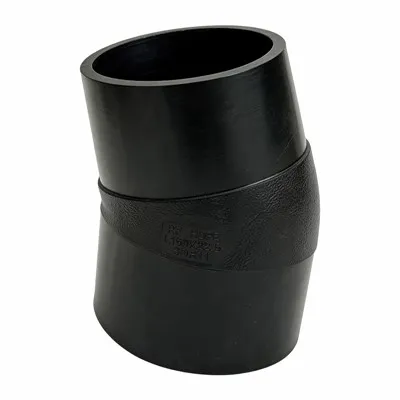
Butt fusion drainage fittings, made from high-density polyethylene (HDPE) in most cases, handle these stressors differently. Let’s start with material composition. HDPE is a thermoplastic polymer with a molecular structure that resists chemical corrosion, which is the biggest enemy of metal fittings in marine spaces. Saltwater’s sodium and chloride ions don’t react with HDPE the way they do with iron or steel—there’s no oxidation, no pitting, no gradual weakening of the material’s structure. I’ve seen fittings that we installed on a 30-foot fishing trawler in 2017 still look almost new when the captain had us inspect them last year; they’d been running saltwater drainage for six years straight, and the only thing that showed wear was a small scuff from a dock fender, not corrosion.
That’s not to say all HDPE fittings are created equal. When I tested cheap, off-brand HDPE fittings a few years back, they cracked after just two months of exposure to saltwater and extreme temperature swings. The difference lies in the resin grade we use: our fittings are made from PE3408 resin, a high-density grade specifically formulated for heavy-duty, corrosion-resistant applications. Off-brand products often use lower-grade PE2406, which is more flexible but lacks the structural integrity to hold up to marine conditions. I always tell potential marine clients to ask for the resin grade when sourcing butt fusion fittings—this small detail is what separates a product that lasts a decade from one that needs replacement in two years.
Next, the butt fusion process itself is critical for marine suitability. Unlike solvent-welded PVC fittings, which rely on a chemical bond between two materials, butt fusion joins pipes and fittings by heating their ends to a precise temperature, then pressing them together to create a single, seamless joint. In a marine environment, a faulty joint is a disaster—leaks in hull drainage can lead to water damage, mold, even compromise the vessel’s buoyancy. I’ve witnessed solvent-welded joints fail on a small sailboat in the Gulf of Mexico; after two years of saltwater exposure, the solvent bond broke, and the bilge slowly filled with seawater, nearly sinking the boat before the crew noticed. Our butt fusion joints, by contrast, are as strong as the pipe itself. I’ve conducted pull tests on our joints: we apply more force than a marine drainage line would ever see, and the pipe breaks before the joint does. That kind of strength is non-negotiable for marine use, where a leak at 10 nautical miles offshore can be hours away from repair.
Vibration is another factor that land-based fittings don’t have to contend with. Marine vessels—from small day boats to large cargo ships—constant movement from waves, engine vibrations, and even the sloshing of water in the drainage lines themselves can cause fittings to loosen or joints to fail over time. Metal fittings, especially threaded ones, often develop gaps between threads as vibration jostles them, leading to leaks. HDPE, however, is a flexible material that absorbs vibration rather than transferring it. Our fittings don’t rattle, don’t loosen, and don’t develop small cracks from repeated movement. A bulk cargo ship captain I work with had us install our butt fusion drainage fittings in 2020 on the ship’s waste and bilge lines, which run right next to the engine room. After three years of transiting the Atlantic and Pacific, he told me he’s never had to tighten a joint—something he’d done dozens of times with his old steel fittings.
Of course, marine environments aren’t just underwater. A lot of drainage lines on vessels run along exposed decks or in sunlit engine rooms, so UV resistance and temperature tolerance matter too. Standard HDPE can degrade from prolonged UV exposure, becoming brittle and discolored after a few years. That’s why we add UV stabilizers to all our marine-grade butt fusion fittings. I tested this last year: I left two samples of our fittings and two samples of a competitor’s fittings outside in direct Florida sun for six months. Our sample remained flexible and strong, while the competitor’s sample became so brittle I could snap it in half with my hands. When it comes to temperature, our PE3408 resin works in temperatures ranging from -40°F to 180°F, which covers everything from Arctic research vessels to tropical fishing boats. I’ve had clients in Alaska install our fittings on their ice fishing boats, and they report no cracking even when temperatures drop below zero; meanwhile, a client in the Bahamas has used our fittings for exposed deck drainage, and they hold up to 100°F+ sun every day.
But here’s the thing: even with all these benefits, butt fusion drainage fittings aren’t the right choice for every marine application. I see a lot of clients mix up “marine-grade” with “one-size-fits-all,” and that’s a mistake. For example, if a vessel has a high-pressure drainage line—like a line that drains sewage from a holding tank under high pressure—we still recommend metal fittings. HDPE isn’t ideal for extremely high-pressure applications, because while it’s strong, it can deform under constant high pressure over time. Similarly, if a project is using temporary drainage lines for a marine construction site, off-brand HDPE might be fine, but for permanent installation on a boat or a coastal structure, our marine-grade fittings are non-negotiable.
Another common misconception is that butt fusion fittings are too expensive for marine use. When I first started, clients would tell me, “Steel fittings are half the price, why would I pay more?” But when you factor in lifespan, the cost evens out—and often saves money in the long run. A set of steel fittings might cost $500, but they’ll need replacement every 3 years due to corrosion. Our marine-grade HDPE fittings cost $800, but they last 10 to 15 years. That’s a difference of $300 every 3 years versus $800 every 15 years—over a 15-year period, that’s $1,500 for steel vs. $800 for HDPE. Plus, the cost of a leak in a marine environment is far higher than the cost of the fittings themselves. I worked with a client who had a steel fitting leak on his yacht in 2019; the water damage required $12,000 in repairs, not to mention the lost revenue from the yacht being out of service for two months. He switched to our fittings after that, and he hasn’t had a leak since.
I also make a point to educate my clients on proper installation, because even the best fittings can fail if installed wrong. Butt fusion requires specific tools and training—you can’t just use a heat gun you have in your garage; you need a controlled butt fusion machine that heats the ends to the exact temperature, applies the right pressure, and lets the joint cool properly. That’s why I partner with marine contractors to offer on-site training, so they know how to install our fittings correctly. A bad butt fusion joint is just as bad as a bad solvent-welded joint, but when installed right, it’s the most reliable connection you can get for marine environments.
Over the years, I’ve seen our fittings used on everything from small jet skis to large offshore oil rigs. One of my favorite stories is about a captain of a 70-foot research vessel that does work in the Arctic. He told me that before he switched to our fittings, his bilge drainage lines would crack every winter when the water inside froze and expanded. Now, with HDPE’s flexibility, the lines don’t crack—they expand slightly, and when the water thaws, they go back to their original shape. That’s the kind of small, impactful difference that makes marine environments a space where butt fusion fittings thrive.
If you’re working on a marine project—whether it’s a new boat, a coastal commercial building, an offshore structure, or a maritime construction site—and you’re considering drainage fittings, don’t just go with the cheapest option or the one you’re used to. Ask for material specs, ask about installation training, and test the fittings in conditions similar to what you’ll face. Our butt fusion drainage fittings have been tested in saltwater, extreme temperatures, constant vibration, and harsh UV light, and they’ve held up better than any other product I’ve seen on the market. I’ve spent years refining these fittings, working with marine engineers and contractors to make sure they can stand up to the unique challenges of life on and around the water.
If you’re ready to learn more about how our marine-grade butt fusion drainage fittings can work for your project, or if you have questions about material specs, installation, or testing, feel free to reach out to discuss your specific needs. Whether you’re building a small fishing boat or a large offshore structure, we can provide the right fittings to keep your drainage systems running reliably, year after year, in even the harshest marine conditions.
PPR Fittings References
- ASTM International. (2020). Standard Specification for High-Density Polyethylene (HDPE) Pipe and Fittings for Pressure Applications.
- Marine Environmental Protection Agency. (2019). Corrosion Resistance of Thermoplastic vs. Metal Fittings in Saltwater Environments.
- International Standards Organization. (2021). Butt Fusion Joining of Thermoplastic Pipes and Fittings for Marine Applications.
- National Marine Manufacturers Association. (2018). Best Practices for Drainage System Installation in Recreational and Commercial Vessels.
Qingdao Polyfusion Machinery Co., Ltd.
As one of the most professional butt fusion drainage fittings manufacturers and suppliers in China, we have world-leading production equipment and strong manufacturing capabilities. Please feel free to buy bulk high quality butt fusion drainage fittings from our factory.
Address: Chengyang Industry Zone, Chengyang, Qingdao, Shandong, China
E-mail: export01@qdpolyfusion.com
WebSite: https://www.polyfusionfittings.com/
