Hey there! As a robot chassis supplier, I’ve seen all sorts of designs, from the super simple to the mind – boggling complex. So, let’s dig into what sets these two types of robot chassis designs apart. Robot Chassis

Simple Robot Chassis Design
Let’s start with the simple ones. A simple robot chassis is like the basic building block of a robot. It’s straightforward, easy to understand, and usually pretty cost – effective.
1. Structure and Components
The structure of a simple chassis is often pretty basic. It might be a flat platform made of materials like plastic or lightweight metal. For example, a small educational robot might have a chassis that’s just a square or rectangular piece of plastic with some holes drilled in it for mounting motors and sensors.
The components are also minimal. You’ll typically find a couple of wheels, a motor or two to drive those wheels, and maybe a simple control board. There’s not a whole lot going on in terms of fancy mechanisms or complex electronics.
2. Functionality
The functionality of a simple robot chassis is, well, simple. It’s mainly designed for basic movement. It can move forward, backward, turn left or right. That’s about it. These types of chassis are great for beginners who are just learning about robotics. They’re easy to program and modify, and you can quickly see the results of your efforts.
For instance, if you’re a student in a robotics class, you might start with a simple chassis to learn the basics of programming a robot to move. You can use a simple code to make it go in a straight line or perform a simple turning motion.
3. Cost and Ease of Production
One of the biggest advantages of a simple robot chassis is the cost. Since it uses fewer components and simpler materials, it’s much cheaper to produce. This makes it an attractive option for hobbyists, small – scale projects, and educational institutions with limited budgets.
The ease of production is also a plus. You don’t need a lot of specialized equipment or advanced manufacturing techniques to make a simple chassis. You can use basic tools like a drill and a saw to cut and assemble the parts.
Complex Robot Chassis Design
Now, let’s talk about the complex robot chassis. These are the ones that really push the boundaries of what a robot can do.
1. Structure and Components
A complex robot chassis has a much more intricate structure. It might have multiple levels, articulating joints, and a variety of specialized components. For example, a robot designed for search and rescue missions might have a chassis with tracks instead of wheels, along with a series of arms and sensors that can be adjusted and moved in multiple directions.
The components in a complex chassis are also more advanced. You’ll find high – powered motors, sophisticated sensors, and complex control systems. These components work together to give the robot a wide range of capabilities.
2. Functionality
The functionality of a complex robot chassis is far more advanced than that of a simple one. These robots can perform complex tasks such as navigating through difficult terrain, picking up and manipulating objects, and even interacting with the environment in a more intelligent way.
For example, a robot used in industrial settings might be able to move around a factory floor, pick up heavy objects, and place them in the correct location. It can use sensors to detect obstacles and adjust its path accordingly.
3. Cost and Production Challenges
Complex robot chassis designs come with a higher price tag. The advanced components and the complex manufacturing processes required to build them make them more expensive. Additionally, the production of a complex chassis is much more challenging. It requires specialized equipment, skilled labor, and a lot of time.
Key Differences
1. Complexity of Design
The most obvious difference is the complexity of the design. Simple chassis designs are, well, simple. They have a basic structure and a limited number of components. Complex chassis designs, on the other hand, are highly intricate, with multiple moving parts and advanced electronics.
2. Functionality
Simple chassis are designed for basic movement, while complex chassis can perform a wide range of complex tasks. The simple ones are great for learning and basic applications, while the complex ones are used in more demanding scenarios such as industrial automation, scientific research, and military applications.
3. Cost
As mentioned earlier, simple chassis are much cheaper to produce than complex ones. This makes them more accessible to hobbyists and small – scale projects, while complex chassis are typically used in large – scale, high – budget projects.
4. Ease of Use and Modification
Simple chassis are easy to use and modify. You don’t need a lot of technical knowledge to work with them. Complex chassis, however, require a higher level of expertise to operate and modify. They often come with their own software and control systems that need to be understood and configured.
Which One Should You Choose?
The choice between a simple and complex robot chassis depends on your needs. If you’re just starting out in robotics, a simple chassis is a great option. It’s affordable, easy to work with, and will help you learn the basics.
If you’re working on a more advanced project, such as an industrial automation system or a scientific research project, a complex chassis might be the way to go. It will give you the functionality and capabilities you need to achieve your goals.
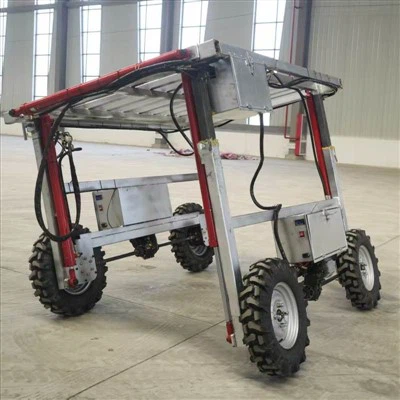
As a robot chassis supplier, I can offer both simple and complex designs to meet your specific requirements. Whether you’re a hobbyist looking for a basic chassis to tinker with or a large – scale enterprise in need of a high – performance solution, I’ve got you covered.
Electric All-Terrain Vehicles If you’re interested in learning more about our robot chassis or want to discuss your specific needs, feel free to reach out. We’re here to help you find the perfect chassis for your project.
References
- "Robotics: A Practical Introduction to the Technology" by George Bekey
- "Fundamentals of Robotics: Analysis and Control" by Krishna M. Lynch and Frank C. Park
Jiangsu Runtong Data Service Co., Ltd.
We are one of the most experienced robot chassis manufacturers in China, specialized in providing high quality customized products. We warmly welcome you to buy bulk discount robot chassis made in China here from our factory. For quotation, contact us now.
Address: Room B, 4th Floor, Annex Building, Building D-1, Shazhou Lake Science and Technology Innovation Park, Huachang Road, Yangshe Town, Zhangjiagang City, Jiangsu Province, China
E-mail: runtongeasy@outlook.com
WebSite: https://www.sloonycon.com/
